




The quick answer: male pattern baldness (androgenetic alopecia) is the most common type of hair loss in men. It is driven by your genes and by the way certain hair follicles react to a hormone called dihydrotestosterone (DHT). Over years, those follicles shrink and produce finer, shorter hairs, usually starting at the temples, the crown or both. It is gradual, it is not caused by anything you did wrong, and it is very common – around half of men are affected by the age of 50. What you do early makes the biggest difference: get the pattern confirmed, talk to your GP or pharmacist about the licensed medical options if you want them, and keep a consistent scalp-care routine that helps your hair look fuller and denser for longer.
November is the month when many men grow a moustache for Movember and start talking a little more openly about their health – and, judging by my clinic diary, about their hair. Searches for “hair loss men” in the UK have roughly doubled since 2021 on Google Trends, and in a 2026 survey of 2,000 UK men, 55% said they worry about their hairline receding, rising to 71% among Gen Z. On X this month, a barber’s “day 1 on minoxidil” post and fresh rumours about a celebrity’s crown kept the topic trending. This guide cuts through the noise: what male pattern baldness is, how to spot it early, what actually influences it, what the evidence says about the options and how I approach it as a trichologist.
What is male pattern baldness?
Each hair grows from a follicle, a tiny organ in the skin that cycles through a long growing phase (anagen), a short transition and a resting phase (telogen) before the hair is released and a new one starts. In male pattern baldness, follicles in certain areas of the scalp are genetically sensitive to DHT, a more potent hormone that the body makes from testosterone using an enzyme called 5-alpha-reductase.
In those sensitive follicles, DHT gradually shortens the growing phase and makes the follicle smaller with each cycle – a process called miniaturisation. The British Association of Dermatologists describes how affected hairs become thinner, shorter and lighter in colour over time. That is why early pattern thinning often looks like “see-through” hair rather than obvious bald skin: the number of hairs may be similar for a while, but each one covers less of the scalp.
The hair at the back and sides of the head is usually spared, because those follicles are much less sensitive to DHT. It is also why hair transplant surgeons take follicles from the back of the scalp.
Importantly, men with pattern hair loss do not usually have “too much testosterone”. Their levels are typically normal; it is the follicles’ inherited sensitivity that matters. More than 190 genes have been linked with male pattern hair loss, which helps explain why it can look so different between brothers. Our article on whether baldness comes from your mother’s side explains the genetics in plain English.
The early signs to look for
Pattern hair loss rarely starts with hair in the plughole. It tends to show up in photos, in bright overhead light or when your barber mentions it. The most common early signs are:
- Temples moving back, so your hairline starts to form an “M” shape. Our guide to a receding hairline vs a mature hairline explains how to tell normal adult change from early recession.
- A thinner crown, often noticed first in a photo taken from above or in a lift mirror. See our guide to a thinning crown for how to tell it from a natural whorl.
- Finer, wispier hairs along the hairline or on top, with the sides and back still thick.
- Hair taking longer to style or not holding volume the way it used to.
- More scalp visible when your hair is wet or under bright light.
Pattern thinning is easy to confuse with other problems, so it helps to compare them side by side.
| Feature | Male pattern baldness | Diffuse shedding (telogen effluvium) | Patchy hair loss |
|---|---|---|---|
| Where | Temples, hairline and crown; sides and back spared | All over the scalp | Round or oval bald patches, sometimes in the beard |
| How it starts | Gradually, over years | Fairly suddenly, often 2–3 months after a trigger such as illness, stress or a crash diet | Often suddenly, sometimes spotted by a barber |
| What you notice | Finer, shorter hairs; more scalp showing | Many full-length hairs in the shower, on the pillow and in your brush | Smooth patches, sometimes with short broken hairs at the edge |
| Course | Progressive and long-term | Usually temporary once the trigger settles | Unpredictable; needs a medical diagnosis |
| First step | Confirm the pattern and plan for the long term | Find and address the trigger | See your GP |
The two can overlap: a spell of shedding after flu, a stressful few months or rapid weight loss can make underlying pattern thinning look suddenly worse. Our guides to telogen effluvium and hair shedding vs hair loss go into the difference in more detail. As a reference point, the NHS says it is normal to lose between 50 and 100 hairs a day.
The stages of male pattern baldness (the Norwood scale)
Clinicians usually describe male pattern hair loss using the Hamilton–Norwood scale, first published by Dr O’Tar Norwood in 1975. You do not need to memorise it, but it gives you and your trichologist or GP a shared language – and it helps you track change over time.
| Stage | What it looks like | What it usually means |
|---|---|---|
| Norwood 1 | Adolescent hairline, no noticeable loss | No pattern loss |
| Norwood 2 | Slight, even rise at the temples | Often a normal “mature” adult hairline |
| Norwood 3 | Deeper recession at the temples, clear “M” shape | Usually the first stage counted as pattern hair loss |
| Norwood 3 vertex | Stage 3 hairline plus thinning at the crown | Pattern loss affecting the crown early |
| Norwood 4–5 | Further recession and a larger thin area at the crown, separated by a band of hair | Moderate pattern loss |
| Norwood 6–7 | The band disappears; hair remains at the sides and back | Advanced pattern loss |
Progress is usually slow – the British Association of Dermatologists notes it can take years to decades – and an earlier start tends to mean faster progression. That is the main reason to act early rather than wait and see.
What makes it more likely – and what doesn’t
Genes and age
These are the two big ones. According to Alopecia UK, around 50% of men over 50 have pattern hair loss, and having a close relative with it raises your chances without guaranteeing it. Large studies in UK Biobank have identified hundreds of genetic regions linked with baldness, including the androgen receptor gene on the X chromosome, which you inherit from your mother. But your father’s genes matter too.
Lifestyle factors with some evidence
A well-known study of 92 pairs of identical twins, published in Plastic and Reconstructive Surgery, compared brothers with the same genes and found that longer smoking history and dandruff went with more hair loss at the front, while longer periods of stress, heavy drinking and smoking went with more thinning at the crown. It cannot prove cause and effect, but it suggests that how you live can nudge how pattern loss shows.
Common myths
- “Wearing a cap makes you bald.” There is no good evidence for this. In the same twin study, daily hat use was actually linked with less hair loss at the temples. Very tight headwear rubbing the same spot every day is a different matter – that is friction, not pattern baldness.
- “Creatine causes baldness.” The worry comes from one small 2009 study that measured a rise in DHT, not hair. A 2025 randomised trial found no difference in DHT or hair measures after 12 weeks. Read the full story in does creatine cause hair loss?
- “Washing your hair too often makes it fall out.” The hairs you see after washing were already on their way out. A clean scalp is a better environment, not a worse one – see how often you should wash your hair.
- “It only comes from your mother’s father.” Partly true, mostly myth – both sides of the family contribute. See is baldness genetic?
When it might be something else
Not every thinning hairline in a man is male pattern baldness. See your GP if you notice:
- round, smooth bald patches on the scalp or in your beard;
- sudden, heavy shedding all over;
- a red, sore, scaly or itchy scalp, or pustules;
- loss of eyebrows or body hair as well;
- hair loss alongside tiredness, weight changes, low mood or a reduced sex drive.
Alopecia UK notes that a GP or dermatologist may suggest blood tests to check things such as iron stores (ferritin), thyroid function and hormones; our guide to blood tests for hair loss explains what these involve. For bald patches, our protocol for patchy hair loss uses Science Antigen Therapy Plus as cosmetic scalp support alongside medical advice – but the diagnosis has to come first. A flaky, greasy scalp also deserves attention in its own right: read seborrhoeic dermatitis and hair loss.
The medical options – what your GP or pharmacist may discuss
I am a trichologist, not a prescriber, and the medical side belongs with your GP, pharmacist or dermatologist. But you deserve a clear, balanced picture before that conversation. The NHS says finasteride and minoxidil are the main medicines for male pattern baldness, that they do not work for everyone, that they only work for as long as they are used and that they are not all available on the NHS.
- Minoxidil 5% (liquid or foam) is available from pharmacies without a prescription. The British Association of Dermatologists says it needs at least 6 and possibly up to 12 months before any benefit may be seen, can irritate the scalp, and may cause extra shedding for the first 4–6 weeks.
- Finasteride 1 mg tablets lower DHT and need a prescription. In April 2024 the MHRA introduced a patient alert card for finasteride packs, reminding patients and prescribers about the risk of depression, suicidal thoughts and sexual side effects, which in some men have persisted after stopping. Anyone considering it should discuss this carefully with a prescriber.
- Hair transplant surgery is private, not NHS. It moves follicles, but the hair around the transplanted area can keep thinning, so a long-term plan still matters. See our guide to hair transplant aftercare.
Two cautions. First, the NHS advises seeing a GP before going to a commercial hair clinic. Second, be wary of online offers that promise guaranteed results – no option works for everyone.
Red light caps, microneedling and that “electric comb”: what the evidence says
Red light therapy caps are one of the fastest-growing beauty searches of 2026, and an experimental “electric comb” made headlines this month. Here is where the evidence stands.
| Option | What the evidence says | My view |
|---|---|---|
| Low-level light (red light caps, helmets, combs) | A 2025 meta-analysis in Dermatologic Surgery pooled 38 studies (3,098 patients) and found greater increases in hair density with light therapy than with sham devices in pattern hair loss, but the studies varied a lot. Alopecia UK notes devices are expensive and need using 3–4 times a week. | A reasonable add-on for some men if used consistently; not a substitute for a diagnosis or a scalp routine |
| Microneedling | The British Association of Dermatologists says there is very little research showing its value as a safe and effective option on its own. | Not something to do at home on an irritated scalp |
| PRP injections | Limited research suggests some benefit, but results are unpredictable (BAD). | Private and costly; ask for honest expectations |
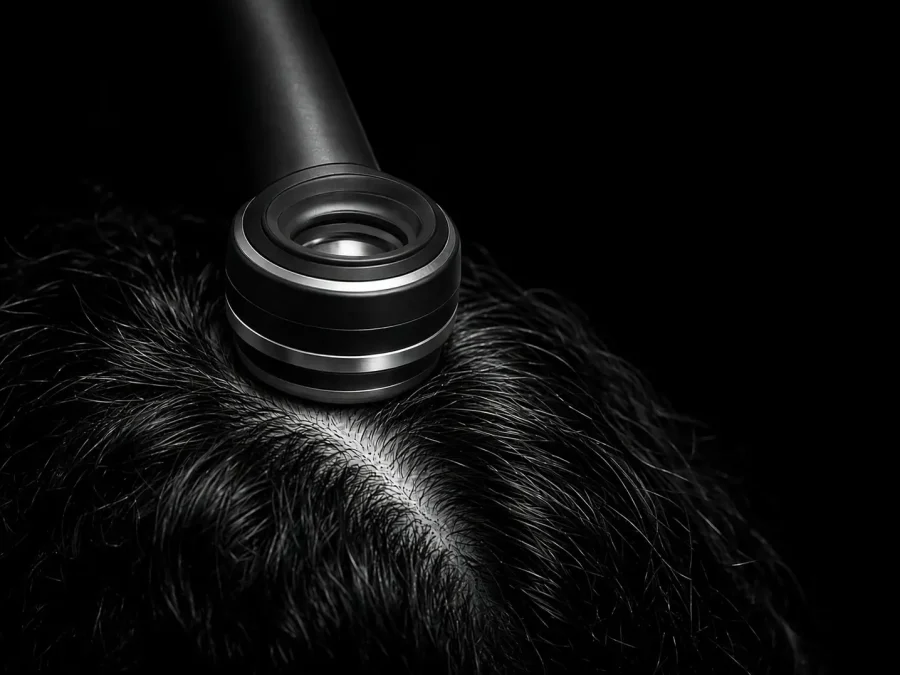
| “Detangle” electric comb | Published in Nature Communications on 3 November 2026; tested only in mice. | Interesting science, years away from your bathroom |
How I approach pattern thinning as a trichologist
My job is to look closely at your scalp and hair, confirm the pattern, rule out anything that needs a doctor and then build a routine you will actually stick to. A hair and scalp analysis lets us measure hair density and see miniaturised hairs under magnification, so we can compare like with like at each review.
Our usage protocol for pattern thinning is a long-term programme of around 11 months, built in three steps: prepare the scalp, cleanse it and then apply a leave-in. It is cosmetic care – it supports a healthier-looking scalp and helps hair look fuller and denser – and it works alongside, not instead of, any medical advice you are given.
| Step | Product | How often | How to use |
|---|---|---|---|
| 1. Prepare | Dermo Capillary Mask Activated Plus (micro-peel mode) | 1–2 times a week, before washing | Apply to a dry or slightly damp scalp, massage 1–2 minutes, leave 3–5 minutes (2–3 if sensitive), rinse well |
| 2. Cleanse | Hair Loss Prevention Shampoo Plus, alternated with Hair Nutrient Royal Jelly Shampoo Plus | 3–4 times a week | Massage 1–2 minutes, leave 2–3 minutes, rinse |
| 3. Core leave-in | PROALOPEX+ | Daily or 5 times a week for 12 weeks, then 3 times a week | On a clean, dry or slightly damp scalp, in sections; massage 1–2 minutes; do not rinse |
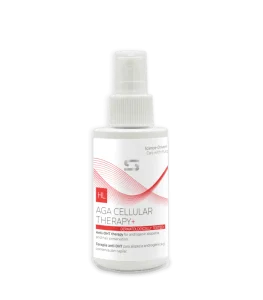
| 3B. Complement (early to moderate thinning, often with an oily scalp) | AGA Cellular Therapy Plus | Daily or 5 times a week for 8–12 weeks, then 3 times a week | As above |
| 3C. When active shedding overlaps | Dixidox Forte Advance Plus | Morning and evening for 10 days, then once a day or 3–5 times a week for 6–8 weeks | As above |
| 3D. Support (can be alternated in the routine) | DNA Hairmax Pro Plus | Alternated with the core leave-in, as advised | As above |
Our shampoos, conditioners and masks are made with the TFD System with biomimetic exosomes; the leave-in serums have their own formulas and do not contain exosomes. You can read more about the technology in exosomes for hair, and compare the leave-ins in our scalp serum guide. More background on the core leave-in is in PROALOPEX+ for pattern thinning, and you can browse the whole Thinning Hair & Hair Loss Care range.
Optional extras by hair type
These sit outside the core protocol and are only worth adding if they suit your hair:
- Volume Therapy Shampoo Plus for fine, flat hair that needs lift on non-protocol wash days;
- Triple Action Conditioner Deep Repair Plus on the lengths if longer hair feels dry or rough;
- Hair Loss & Colors Shampoo Plus if you colour your hair or blend grey.
What to expect, and when
Hair biology is slow. Scalp hair grows roughly a centimetre a month, and each follicle works to its own cycle. I ask men to judge the routine on standardised photos at three, six and twelve months, not on the mirror from one week to the next. Consistency matters far more than intensity.
Everyday habits that help hair look its best
- Get the haircut right. Shorter sides and a little texture on top usually make thinning less noticeable than growing it long to cover it.
- Protect your scalp. As hair thins, the scalp is more exposed; the British Association of Dermatologists recommends sun cream or a hat on thinning areas in the sun.
- Keep dandruff under control. A flaky, inflamed scalp is never a good environment for hair, and it was linked with more frontal loss in the twin study.
- Don’t smoke, and keep alcohol moderate.
- Eat enough protein and iron, especially if you are training hard or losing weight – see protein for hair loss and, if you are on a weight-loss medicine, GLP-1 medicines and male pattern hair loss.
- Look after your mental health. In the 2026 survey, 11% of men said they avoid having their photo taken because of their hairline. If hair loss is getting you down, talk to someone – a friend, your GP or a support group such as Alopecia UK.
Explore the rest of this guide
- Receding hairline or mature hairline? How to tell the difference
- Thinning crown in men: whorl, lighting or early balding?
- Does baldness come from your mother? What the genetics say
- Does creatine cause hair loss? What the evidence says
Your questions answered
What are the first signs of male pattern baldness?
Usually a deepening “M” at the temples, a thinner patch at the crown, or finer, wispier hairs on top while the sides and back stay thick. It tends to show in photos and bright overhead light before you notice extra hairs in the shower.
At what age does male pattern baldness start?
It can start at any time after puberty. Many men notice changes in their twenties or thirties, and around half of men are affected by the age of 50. An earlier start tends to mean faster progression, so it is worth getting it assessed early.
Can male pattern baldness be slowed down?
The licensed medicines – minoxidil and finasteride – aim to slow its progression, but they do not work for everyone and only work while they are used; discuss them with your GP or pharmacist. A consistent scalp-care routine cannot change your genes, but it supports a healthier-looking scalp and helps hair look fuller and denser.
Does male pattern baldness come from your mother?
Partly. A key gene, the androgen receptor gene, sits on the X chromosome, which men inherit from their mother. But hundreds of other genetic regions on chromosomes from both parents also contribute, so your father’s side matters too.
Do red light therapy caps work for male pattern baldness?
There is some evidence: a 2025 review of 38 studies found greater gains in hair density with low-level light than with sham devices, although the studies varied a lot. Devices need regular use for months and work best as part of a wider plan, not on their own.
Is it male pattern baldness or just shedding?
Pattern baldness is gradual and follows a pattern at the temples and crown, with finer hairs. Shedding (telogen effluvium) is sudden and all over, with many full-length hairs falling, usually two to three months after a trigger. They can overlap, so if you are unsure, get your scalp assessed.
Sources
- British Association of Dermatologists. Hair loss – male pattern (androgenetic alopecia), patient information leaflet. Updated June 2024.
- Alopecia UK. Pattern hair loss. Updated 6 February 2026.
- NHS. Hair loss.
- MHRA. Drug Safety Update: finasteride – psychiatric and sexual side effects. 29 April 2024.
- Norwood OT. Male pattern baldness: classification and incidence. Southern Medical Journal 1975;68(11):1359–65.
- Gatherwright J et al. The contribution of endogenous and exogenous factors to male alopecia: a study of identical twins. Plastic and Reconstructive Surgery 2013;131(5):794e–801e.
- Hagenaars SP et al. Genetic prediction of male pattern baldness. PLoS Genetics 2017;13(2):e1006594.
- Low-level laser and LED therapy in alopecia: a systematic review and meta-analysis. Dermatologic Surgery, 2025.
- Alopecia UK. Low level laser light (FAQ). 2024.
- Liu F et al. The “Detangle” electrostimulation comb study in a mouse model. Nature Communications, 3 November 2026.
- Elithair / Censuswide. UK Hair Confidence Report 2026 (survey of 2,000 UK men, November 2025).
This article is for general information and does not replace advice from your GP, pharmacist or another health professional. SIMONE TRICHOLOGY products are cosmetics, not medicines: they do not diagnose or correct male pattern baldness or any other medical condition. If you are worried about your hair loss, please speak to your GP.