
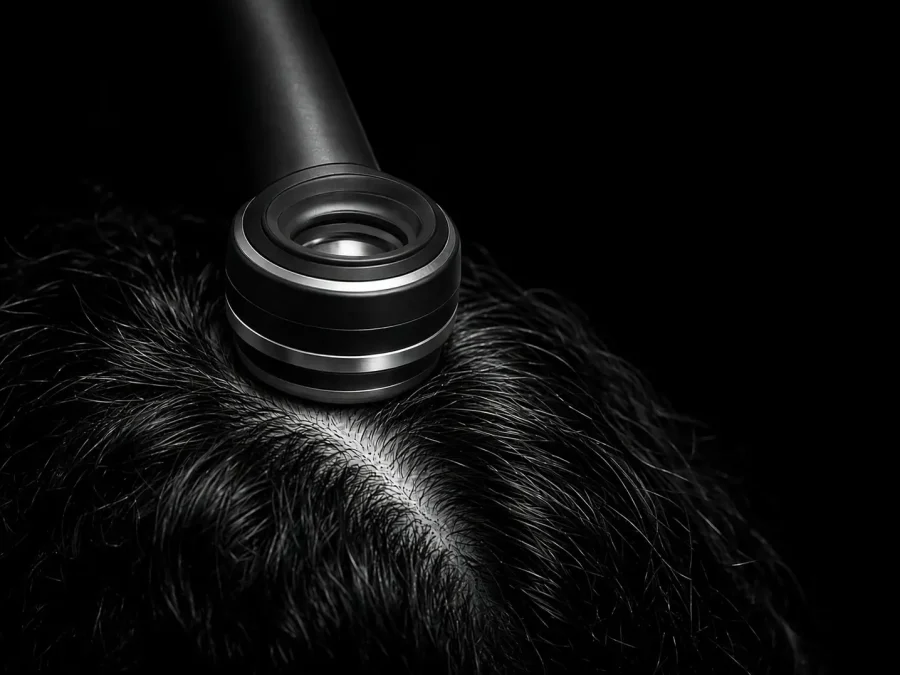

The quick answer: “exosomes” covers two very different things. In clinics, exosome hair procedures use vesicles taken from human or animal stem cells, usually injected or applied after microneedling; early studies are interesting but small, and these are medical procedures, not hair-care products. In hair care, such as those used in the TFD System, the word describes plant-based, lab-made vesicles that act as a delivery system – carrying the formula’s actives towards the area around the follicle and releasing them gradually. They help a well-designed formula work more efficiently on the scalp; they do not change the hair cycle or replace medical care for hair loss.
Exosomes are one of the most talked-about words in hair care, and I understand why people are confused – the same term appears on clinic price lists, in research papers and on shampoo bottles. As we use exosome technology across our own range, I want to be clear about what it is, what the science currently says and what you can realistically expect.
What are exosomes?
Exosomes are tiny bubbles – roughly 30 to 150 nanometres across, far smaller than a cell – that cells release to communicate with one another. Each one is wrapped in a fatty membrane and carries proteins, lipids and genetic messages from the cell that made it. Scientists call them extracellular vesicles.
In the hair follicle, cells in the dermal papilla (the “control centre” at the base of the follicle) and the surrounding tissue exchange these signals all the time. That is why researchers became interested in whether exosomes could influence the hair cycle – and why the word has moved so quickly from the laboratory into marketing.
Exosome hair treatments in clinics: what the evidence says
In aesthetic clinics, exosome procedures for hair typically use vesicles harvested from stem cells – often from fat tissue, umbilical cord or placenta – which are injected into the scalp or applied after microneedling.
Promising, but early
- A 2023 systematic review found 16 studies, of which 15 were laboratory or animal studies and only one was a clinical study in people, involving 39 patients with androgenetic alopecia (Gupta et al., J Cosmet Dermatol).
- A 2025 systematic review identified 11 clinical studies, only two of them randomised controlled trials. Results were encouraging, but the authors highlighted small sample sizes, varied methods and short follow-up, and called for larger, better-designed trials (Al Ameer et al., Clin Cosmet Investig Dermatol).
Safety and regulation
Products derived from human cells raise questions about sourcing, purity and consistency. The US Food and Drug Administration has warned consumers that there are no approved exosome products for these uses. In the UK, ingredients made from human cells or tissues are not permitted in personal-care products at all – so a hair-care product sold here cannot legally contain human stem-cell exosomes.
If you are considering a clinic procedure, speak to your GP or a dermatologist first, ask exactly what is being used and where it comes from, and be wary of promises of dramatic results.
Biomimetic exosomes in hair care: a different thing
“Biomimetic” means designed to imitate something found in nature. Biomimetic or exosome-like vesicles used in hair care are made from plant or synthetic materials, with no human or animal cells involved. Their role is not to send biological instructions to the follicle but to act as a carrier: they protect the ingredients inside them and help bring them to where they are wanted.
Plant-derived exosome-like nanovesicles are an active area of skin research, particularly as a way to improve the stability and delivery of ingredients. That is the role they play in a well-formulated hair product.
What the biomimetic exosomes in the TFD System do – and don’t do
TFD stands for Targeted Follicular Delivery, the vegan biomimetic exosome platform used in all SIMONE TRICHOLOGY shampoos, conditioners and masks. You can read more about how we approach formulation in cosmeceuticals and trichoceuticals explained.
What they are designed to do
- Carry the formula’s actives – peptides, plant extracts, proteins, vitamins – towards the area around the follicle.
- Release them gradually, so the actives stay stable and available on the scalp for longer.
- Keep the formula well tolerated, which matters for sensitive or reactive scalps.
- Support the formula’s dermocosmetic benefits: a balanced, comfortable, healthier-looking scalp and hair that looks fuller and denser.
What they don’t do
- They are not stem cells and contain no human or animal material.
- They do not reprogramme the follicle or alter the hair cycle.
- They do not reverse pattern hair loss or replace medical options such as minoxidil or finasteride.
- They do not work on their own: the results come from the whole formula and from using it consistently.
How to tell a good exosome product from hype
- Check the claims. A hair-care product may describe how hair and scalp look and feel. Medical-sounding promises, or claims to reverse baldness, are red flags.
- Ask what the exosomes are made from. Plant-based or biomimetic is what you should expect in a UK hair-care product.
- Look at the whole formula. The carrier matters less than the actives it carries and how suitable they are for your scalp.
- Be realistic about time. Hair grows about a centimetre a month, so give any routine at least three months.
- Know the cause. If you are not sure whether you are dealing with shedding or hair loss, start there. Temporary shedding such as telogen effluvium needs a different approach from pattern thinning.
Where you’ll find the TFD System in our range
The biomimetic exosomes in the TFD System are in all of our shampoos, conditioners and masks – the rinse-off steps of a routine. Our leave-in scalp serums use different formulas and do not contain exosomes – see our scalp serum guide to choose one. You can read more on the TFD System page.
Shampoos
- Hair Loss Prevention Shampoo Plus – for early or reactive thinning; keeps the scalp comfortable and helps roots feel more firmly anchored.
- Hair Nutrient Royal Jelly Shampoo Plus – for fine, fragile hair that needs body without weight.
- Volume Therapy Shampoo Plus – lift at the roots for fine, flat hair.
- Hair Loss & Colors Shampoo Plus – colour-safe and strengthening for coloured hair that looks thinner.
- Sebum Control Shampoo Plus – balancing care for an oily scalp.
- Dandruff & Scalp Care Shampoo Plus – for flaking and itching.
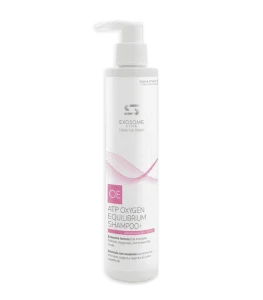
- ATP Oxygen Equilibrium Shampoo Plus – a scalp detox shampoo for a heavy, congested-feeling scalp.
- Nutri Fiber Moisturizing Shampoo Plus – moisture and strength for dry, damaged hair.
Conditioners and masks
- Triple Action Conditioner Deep Repair Plus – a lightweight conditioner for dry, chemically treated or snap-prone lengths.
- Dermo Capillary Mask Activated Plus – a two-in-one product: in Micro-Peel mode on the scalp 1–2 times a week before washing, and in Deep Repair Mask mode after shampooing 1–3 times a week when the scalp or lengths feel dry.
If you also use a leave-in scalp serum, apply it as a separate step on a clean scalp; it works alongside your exosome shampoo rather than containing exosomes itself.
To choose a shampoo, see our guides to the best shampoo for hair loss and hair loss shampoo for women, or browse the full Hair Treatments Store. For a personalised suggestion, send three photos to our free online Hair Clinic.
When to see your GP
No hair-care product – with or without exosomes – is the right first step if your hair loss is sudden or heavy, comes out in patches, is accompanied by a sore, red or scaly scalp, affects your eyebrows or body hair, or comes with other symptoms such as tiredness or weight change. Your GP can look for underlying causes and refer you to a dermatologist if needed.
Your questions answered
What are exosomes for hair?
Exosomes are tiny vesicles that cells release to communicate. In clinics, exosomes taken from stem cells are used in hair procedures; in hair care, the term usually refers to plant-based or biomimetic vesicles that carry a formula’s actives to the scalp and release them gradually.
Do exosome hair treatments work?
Clinic procedures using stem-cell exosomes have shown encouraging early results, but most studies are small, few are randomised controlled trials and long-term data are lacking. Speak to your GP or a dermatologist before considering one.
Are exosomes in shampoos and masks the same as clinic exosomes?
No. In the UK, ingredients made from human cells or tissues are not permitted in personal-care products. Exosomes in hair care are plant-based or biomimetic vesicles that act as a delivery system for the formula’s other ingredients.
What are the biomimetic exosomes in the TFD System?
TFD stands for Targeted Follicular Delivery. They are vegan, lab-made vesicles used in all SIMONE TRICHOLOGY shampoos, conditioners and masks to carry actives towards the area around the follicle and release them gradually, helping the formula keep the scalp comfortable and hair looking fuller and denser.
Can exosomes reverse hair loss?
No hair-care product can reverse pattern hair loss, with or without exosomes. Biomimetic exosomes help a hair-care formula work efficiently on the scalp, but medical hair loss needs assessment by a GP or dermatologist.
Are exosome hair products safe?
Hair-care products sold in the UK must meet strict safety rules, and plant-based biomimetic vesicles are generally well tolerated. Clinic procedures that use human-derived exosomes raise more questions about sourcing and consistency, so get medical advice first.
Sources
- Gupta AK, Wang T, Rapaport JA. Systematic review of exosome treatment in hair restoration: preliminary evidence, safety, and future directions. J Cosmet Dermatol. 2023;22(9):2424–2433.
- Al Ameer MA, et al. Exosomes and hair regeneration: a systematic review of clinical evidence across alopecia types and exosome sources. Clin Cosmet Investig Dermatol. 2025;18:2215–2227.
- Zhou Y, et al. Exosomes for hair growth and regeneration. J Biosci Bioeng. 2024;137(1):1–8.
- Liu H, et al. Plant-derived exosome-like nanovesicles: a novel therapeutic perspective for skin diseases. J Nanobiotechnology. 2025;23(1):640.
- US Food and Drug Administration. Consumer alert on regenerative medicine products including stem cells and exosomes.
- Regulation (EC) No 1223/2009 (as retained in UK law), Annex II – list of prohibited substances (entry: cells, tissues or products of human origin).
SIMONE TRICHOLOGY products are dermocosmetics and are not intended to diagnose, treat or prevent any medical condition. If your hair loss is sudden, patchy or worrying you, please speak to your GP or a dermatologist.