


The quick answer: hair shedding means more hairs than usual are falling out, but the follicles are still working and new hairs follow. Hair loss means something is preventing hair from growing as it should – the follicles are shrinking, inflamed, damaged or under attack – so the hair that falls out is not replaced in the same way. Shedding is usually sudden, diffuse and temporary; hair loss tends to be gradual, patterned or patchy, and it rarely settles on its own.
“Am I losing my hair, or is this just shedding?” is a question I hear almost daily. The two look the same in the shower drain, but they mean very different things for your scalp and for what you should do next. Here is how I tell them apart in clinic, the simple checks you can do at home, and when it is time to see your GP.
Shedding and hair loss: what is the difference?
Each hair follicle works in cycles: a long growing phase (anagen), a short transition, a resting phase (telogen) and then release of the old hair, after which the same follicle starts producing a new one. Losing hair at the end of that cycle is completely normal – the NHS and the American Academy of Dermatology both put typical daily shedding at around 50 to 100 hairs.
Excessive shedding
When noticeably more hairs than usual reach the end of the cycle at once, we call it excessive shedding. The medical term is telogen effluvium. It is usually set off by a trigger such as illness, childbirth, stress or a crash diet, and it shows up two to three months later. Crucially, the follicles are intact, so once the trigger has passed the cycle resets.
Hair loss
True hair loss happens when something interferes with the follicle itself. In pattern hair loss (androgenetic alopecia) the follicles gradually shrink and produce finer, shorter hairs. In alopecia areata the immune system targets the follicles in patches. In traction alopecia, constant pulling damages them, and in scarring alopecias the follicle is permanently replaced by scar tissue. Here, it is not that more hairs are falling out – it is that fewer full-thickness hairs are being produced.
Side by side: shedding vs hair loss
| Hair shedding | Hair loss | |
|---|---|---|
| How it starts | Suddenly, often 2–3 months after a trigger | Usually gradually, over months or years (patches can appear quickly) |
| What you notice first | Lots of hair in the brush, shower and on the pillow | A wider parting, more visible scalp, a receding hairline or a bald patch |
| Where | All over the scalp | A pattern (crown, parting, temples) or defined patches |
| The hairs themselves | Full-length, normal thickness, with a small white bulb at the root | Often finer, shorter or broken; sometimes few hairs fall at all |
| Ponytail | Feels thinner all over | May feel similar, while the front or top looks sparser |
| Usual course | Settles within about six months once the trigger has passed | Tends to continue or progress without medical advice |
The two can also overlap. A bout of shedding sometimes reveals early pattern thinning that was already there, which is why a fresh look at your scalp after the shedding settles is so useful.
Five checks you can do at home
None of these replaces a professional assessment, but together they give you a good first picture.
1. Look at a fallen hair
Pick up a few hairs from your pillow or brush. A full-length hair with a tiny white or translucent bulb at one end is a normal shed (club) hair – the type you see in shedding. Lots of short hairs with no bulb, or hairs with jagged ends, point to breakage rather than loss from the root; see why hair breaks.
2. Compare your parting and crown
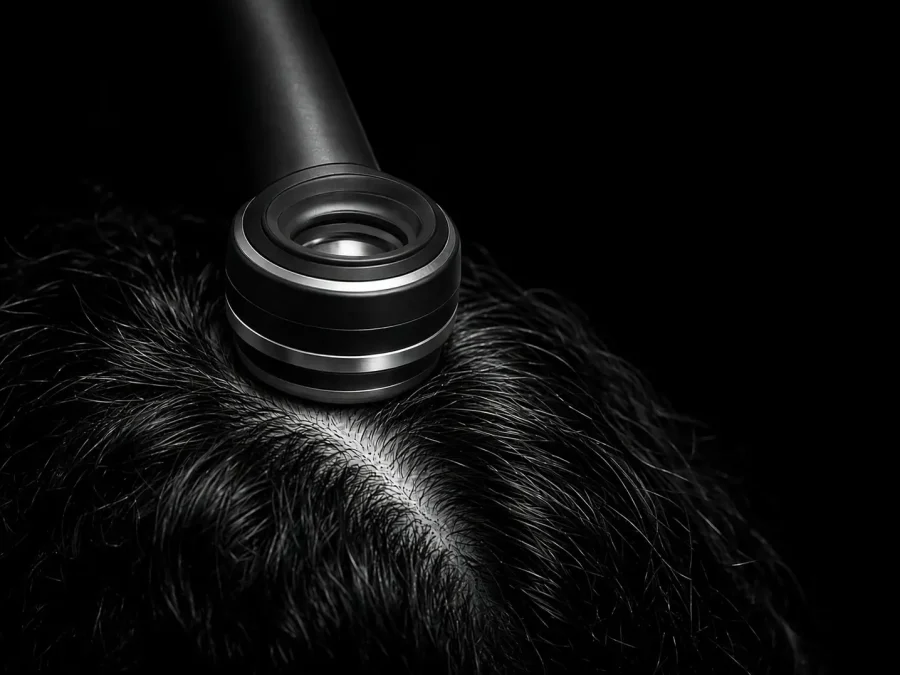
Under the same bright light, take photos of your parting, crown and temples once a month. In shedding, the scalp looks broadly the same from month to month. A parting that is steadily widening, or a crown that is increasingly visible, suggests pattern thinning.
3. Notice the timing
Think back three months. A high temperature, an operation, a new baby, a stressful event or a sudden change in diet before the shedding started all point towards telogen effluvium. Many people also notice extra shedding in late summer and autumn – see seasonal hair loss.
4. Check for patches
Run your fingers over the whole scalp, including behind the ears and at the nape. Smooth, round or oval bald patches are not shedding; they need to be looked at, as they are typical of alopecia areata.
5. Look at your hairline and hairstyle
Thinning along the edges where hair is pulled back tightly – ponytails, braids, extensions – suggests traction alopecia. Catching it early and loosening the style makes a real difference.
Common causes of each
Usually shedding
- illness with fever, surgery or a general anaesthetic;
- childbirth – read about postpartum hair loss;
- a period of significant stress;
- rapid weight loss (including on weight-loss jabs), very restrictive diets or low iron stores;
- starting or stopping certain medicines, including hormonal contraception;
- seasonal changes.
Usually hair loss
- androgenetic alopecia – male and female pattern hair loss, which often becomes more noticeable around the menopause;
- alopecia areata;
- traction alopecia;
- scarring alopecias and some scalp conditions;
- certain medical treatments, such as chemotherapy, which affect hair in the growing phase.
Thyroid problems and iron deficiency can contribute to either picture, which is one reason a GP blood test is often a sensible first step. For a wider overview of the types and causes, read Hair Loss Explained or, for women specifically, our guide to female hair loss.
Myths that cause unnecessary worry
- “Washing makes my hair fall out.” The hairs in the plughole were already released; washing just collects them. If you wash less often, you simply see more at once. See how often you should wash your hair.
- “Brushing causes hair loss.” Gentle brushing does not; harsh brushing of wet hair can cause breakage, which is different.
- “If I’m shedding, I must be going bald.” Most episodes of heavy shedding are temporary and leave no lasting change in density.
- “No hairs falling out means no hair loss.” Pattern thinning often happens quietly, with hairs becoming finer rather than falling in large numbers.
What helps in each case
If it is shedding
Identify and address the trigger, eat regularly with enough protein and iron-rich foods, and be gentle with your hair while the cycle resets. Keep washing normally with a mild shampoo. Our guide to telogen effluvium explains the recovery timeline step by step.
If it looks like hair loss
Get a diagnosis first. Pattern hair loss is best assessed by your GP or a dermatologist, because the options with the strongest evidence are medicines. Dermocosmetic care is a useful partner alongside them: a scalp kept clean and balanced, and lightweight products that help hair look fuller and denser. To choose a shampoo, read best shampoo for hair loss.
Our picks from the SIMONE TRICHOLOGY range
Our clinic protocols match the leave-in serum to the cause, always with Hair Loss Prevention Shampoo Plus and Hair Nutrient Royal Jelly Shampoo Plus alternated 3–4 times a week (massage 1–2 minutes, leave 2–3 minutes, rinse) and Dermo Capillary Mask Activated Plus in Micro-Peel mode 1–2 times a week before washing:
- Shedding after a fever or illness: Dixidox Forte Advance Plus; for very heavy or reactive shedding, PROSCIENCE+ as the “shock” option.
- Shedding after having a baby or around the menopause: Royal Jelly Hair Activator Plus.
- Diffuse thinning, or thinning from tight styles or friction: DNA Hairmax Pro Plus.
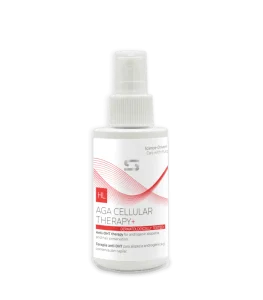
- Pattern thinning at the crown, parting or hairline: PROALOPEX+ as the long-term base, with AGA Cellular Therapy Plus as a complementary option – alongside medical advice.
- Patchy hair loss: Science Antigen Therapy Plus as part of a leave-in scalp-care routine for patchy hair loss, after a medical diagnosis.
Programmes and frequencies are in our scalp serum guide. As an optional extra for fine, flat hair, Volume Therapy Shampoo Plus adds lift at the roots without weight.
Browse the full Thinning Hair & Hair Loss Care range. If you are still unsure which you are dealing with, send three photos to our free online Hair Clinic and a trichology specialist will send you a personalised assessment, with no obligation.
Curious what your scalp is really telling you? SIMONE Hair Scanner reads it from three guided photos and sends your protocol in minutes, free on Android. Try the SIMONE Hair Scanner app
When to see your GP
- shedding has lasted longer than six months, or keeps returning;
- you notice bald patches, or your eyebrows, eyelashes or body hair are affected;
- your scalp is itchy, red, scaly, painful or scarred (see seborrhoeic dermatitis and hair loss);
- your parting, crown or hairline is changing steadily;
- you have other symptoms, such as tiredness, weight change or irregular periods;
- the hair loss is affecting a child, or is causing you significant distress.
Your questions answered
What is the difference between hair shedding and hair loss?
Shedding is when more hairs than usual fall out but the follicles keep working, so new hairs follow. Hair loss is when something stops the follicles producing hair normally, for example pattern hair loss, alopecia areata or traction alopecia.
How many hairs a day is normal to lose?
Losing around 50 to 100 hairs a day is considered normal. You may notice more on wash days, especially if you wash your hair less often, because hairs that were already released are collected at once.
How can I tell if my hair is shedding or thinning?
Shedding is sudden and diffuse, and the hairs that fall are full-length with a small white bulb at the root. Thinning is usually gradual, with a widening parting, a more visible crown or a receding hairline, and the hairs often become finer.
Does hair shedding stop on its own?
In most cases, yes. Shedding caused by a trigger such as illness, childbirth or stress usually settles within about six months once the trigger has passed. If it lasts longer, see your GP.
Can stress cause hair loss or just shedding?
Stress most often causes shedding, known as telogen effluvium, which tends to appear two to three months after a stressful period and is usually temporary. Stress can also make existing hair or scalp conditions more noticeable.
When should I worry about hair falling out?
See your GP if hair comes out in patches, shedding lasts more than six months, your parting or hairline is steadily changing, your scalp is sore or scaly, or you have other symptoms such as tiredness or weight change.
Sources
- NHS. Hair loss.
- American Academy of Dermatology. Do you have hair loss or hair shedding?
- DermNet. Telogen effluvium.
- British Association of Dermatologists. Alopecia areata – patient information leaflet.
- Malkud S. Telogen effluvium: a review. J Clin Diagn Res. 2015;9(9):WE01–WE03.
SIMONE TRICHOLOGY products are dermocosmetics and are not intended to diagnose, treat or prevent any medical condition. If your hair loss is sudden, patchy or worrying you, please speak to your GP or a dermatologist.