
In short: trichoscopy is the examination of the scalp and hair under magnification, with a handheld or digital dermatoscope. It is non-invasive, takes a few minutes and shows what the naked eye cannot: the state of the scalp surface, the apparent density of the hair, the thickness of the shafts and the appearance of the follicular openings. In Europe it is usually part of a trichologist or dermatologist consultation; a first assessment of your hair and scalp can also be done online, free of charge, through SIMONE TRICHOLOGY’s Hair Clinic.
If you have ever wondered why your hair looks thinner, why your scalp gets oily or flaky, or whether your routine is working, this is where to start. Below: what trichoscopy shows, how it differs from a trichogram and from “hair analysis” tests, what it costs, and how to get one — in person or online.
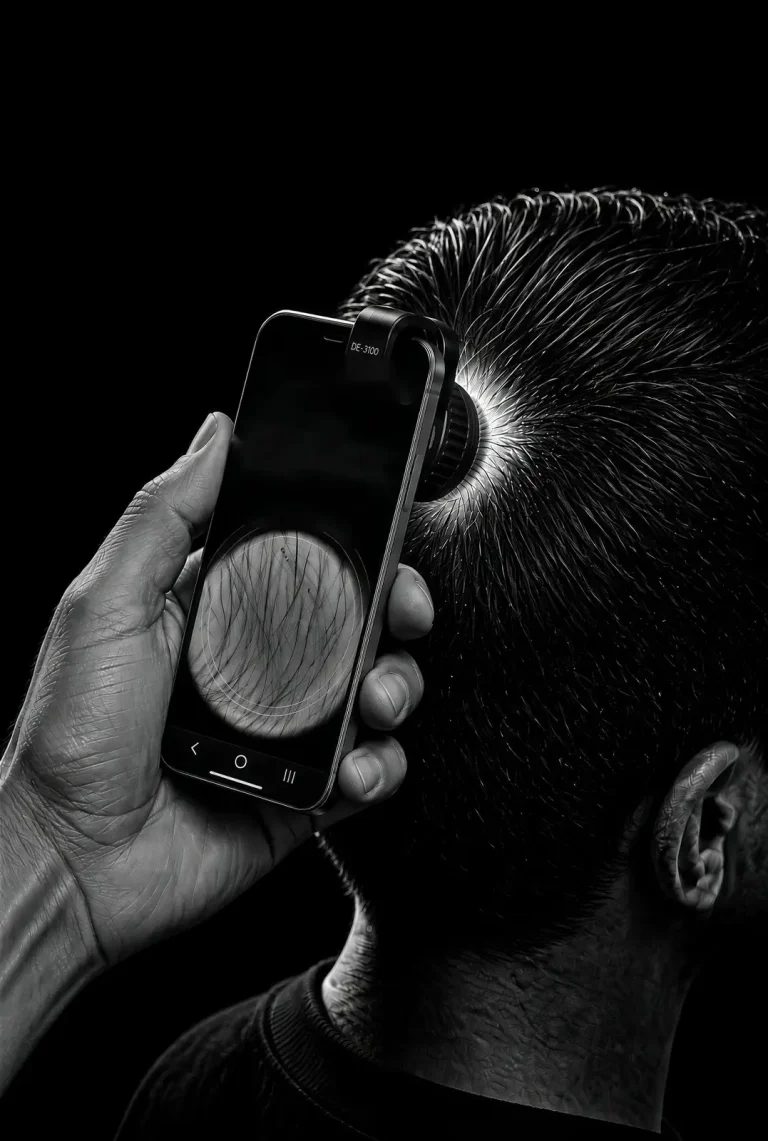
What is trichoscopy?
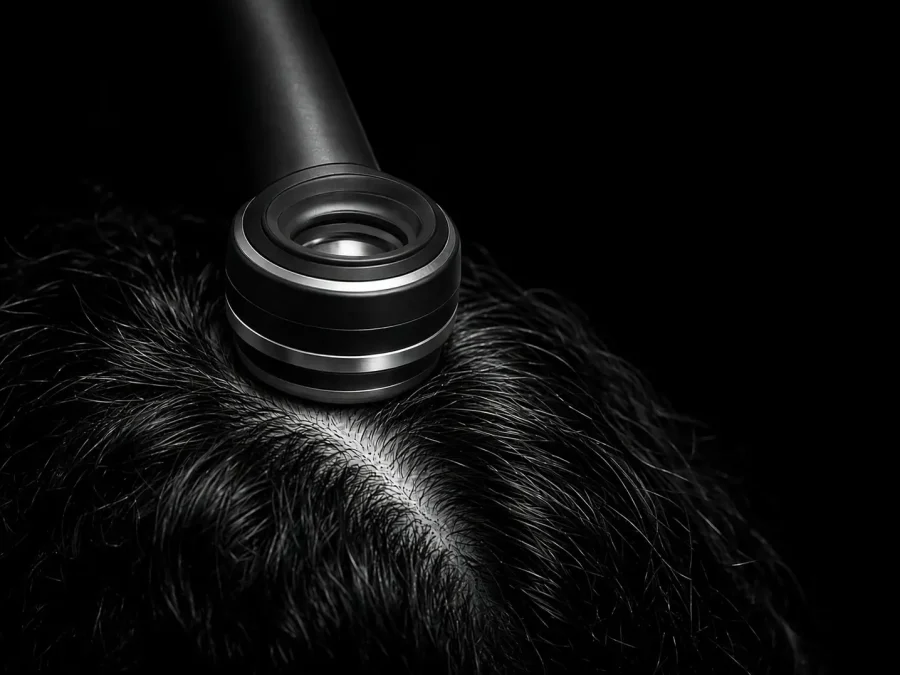
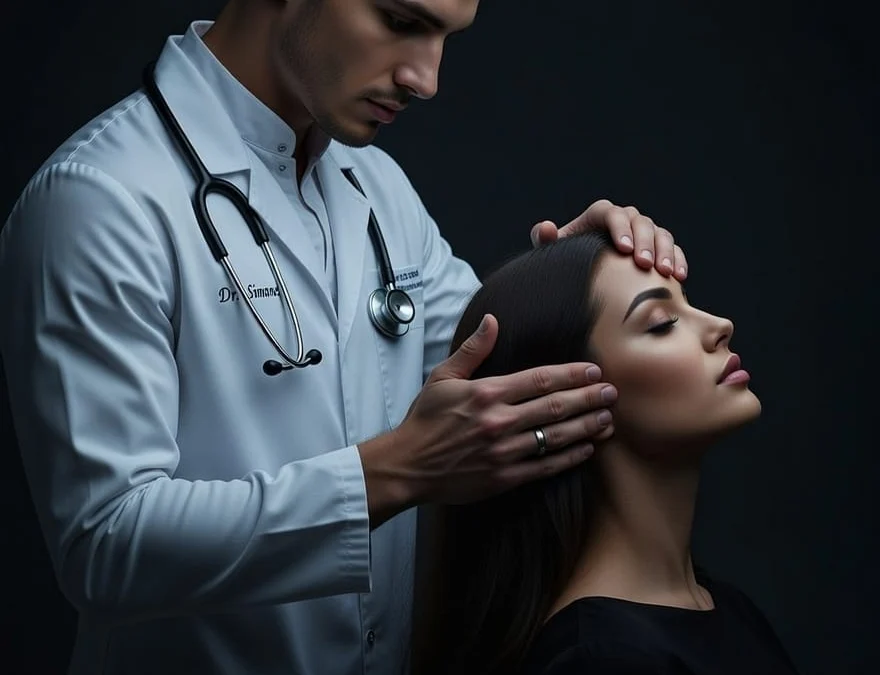
Trichoscopy is dermoscopy applied to the scalp and hair. A dermatoscope — a magnifying lens with polarised light, often attached to a smartphone or a camera — is placed on the scalp and the trichologist or dermatologist observes the skin and the hair at 10× to 70× magnification. Because it is carried out on the surface of the skin there are no needles, no samples and no discomfort, and the images can be saved and compared over time. In trichology practice it is the first and most useful tool for understanding a hair or scalp concern. Our pillar chapter on trichogram and trichoscopy covers the technique in depth.
What a trichoscopy shows
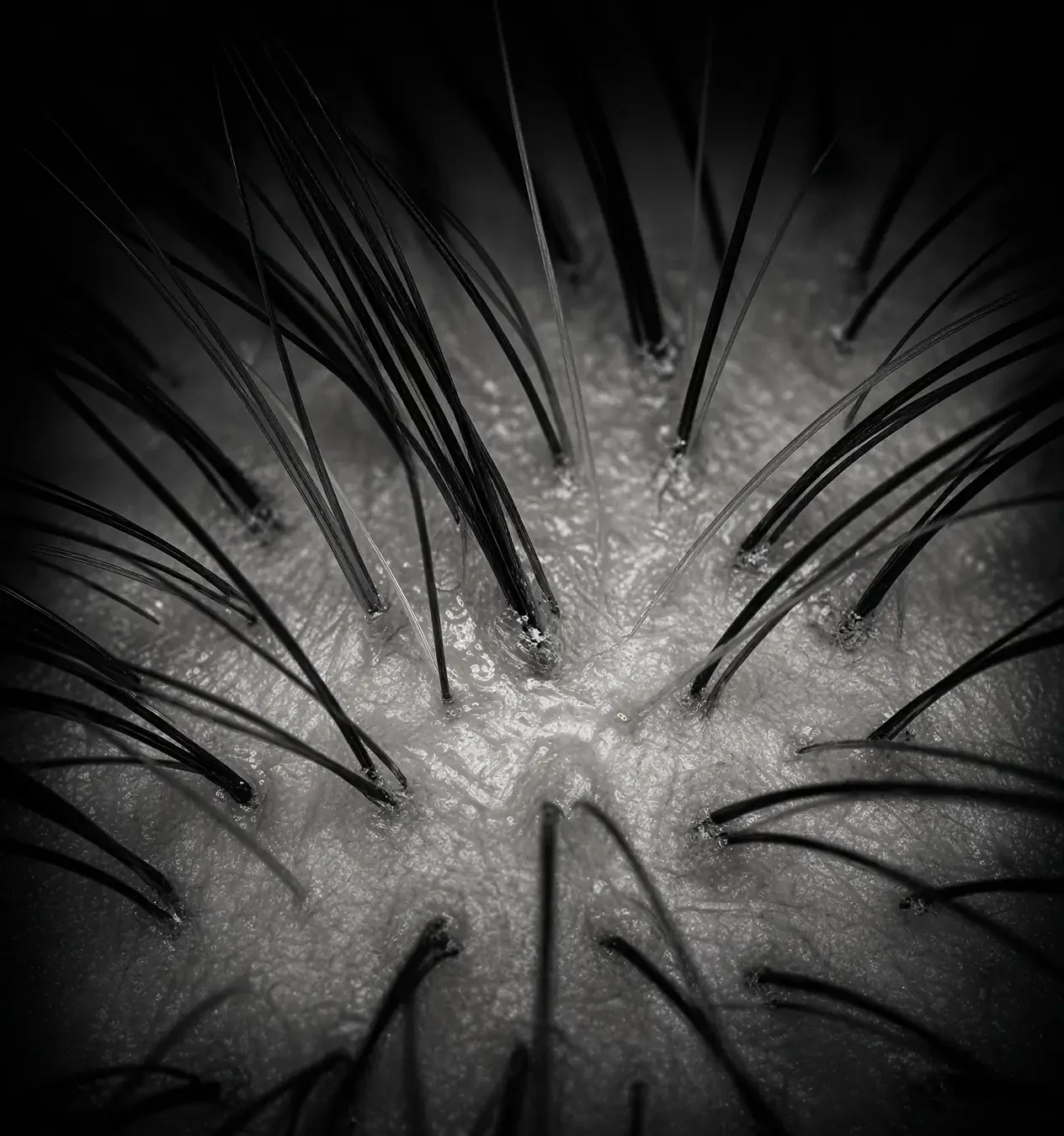
Under magnification a trichologist can observe and record:
- The scalp surface — oiliness, dryness, flaking, redness or signs of sensitivity, and how the sebum sits around the follicular openings.
- Apparent hair density in different areas of the scalp (crown, temples, parting), which helps tell a diffuse pattern from a localised one.
- Hair shaft thickness and the proportion of fine, weaker-looking hairs next to normal ones — the visual signature of thinning.
- Follicular openings: how many hairs emerge from each, whether some are empty, and whether there is build-up around them.
- Change over time: photographs taken at the same spot every few months show whether a care routine is making a visible difference, which is almost impossible to judge by eye.
Together this builds a clear picture of the current condition of your hair and scalp — the foundation for choosing a suitable trichological dermocosmetic routine instead of guessing. Any medical diagnosis, however, is made by a doctor from the full clinical picture; trichoscopy is the observation that informs it.
Trichoscopy, trichogram or hair mineral analysis?
Three different things are often called “hair analysis”:
- Trichoscopy — the magnified examination described above. Non-invasive, immediate, repeatable.
- Trichogram — a small sample of hairs (typically 50–100) is plucked and examined under a microscope to count how many are in the growth, transition and resting phases. Useful in some clinical cases, but it is invasive and depends on preparation; today it is largely replaced by trichoscopy.
- Hair mineral analysis — a laboratory test that measures minerals or other substances in a cut hair sample. It says nothing about the scalp or the follicles and is not a tool for assessing hair thinning or scalp conditions.
In trichology and everyday hair care, “hair and scalp analysis” means trichoscopy.
How much does a trichoscopy cost?
Prices vary widely by country and city. In most of Europe a trichoscopy is included in a consultation with a trichologist or a dermatologist rather than billed separately: a trichology consultation with trichoscopy and a written report commonly sits in the range of €40–€150 (around £50–£150 in the UK), and a private dermatology appointment can cost more. Some centres offer a digital trichoscopy with photographs stored for follow-up, which is the most useful format if you plan to track a routine over several months. Ask whether the price includes the report and a follow-up visit.
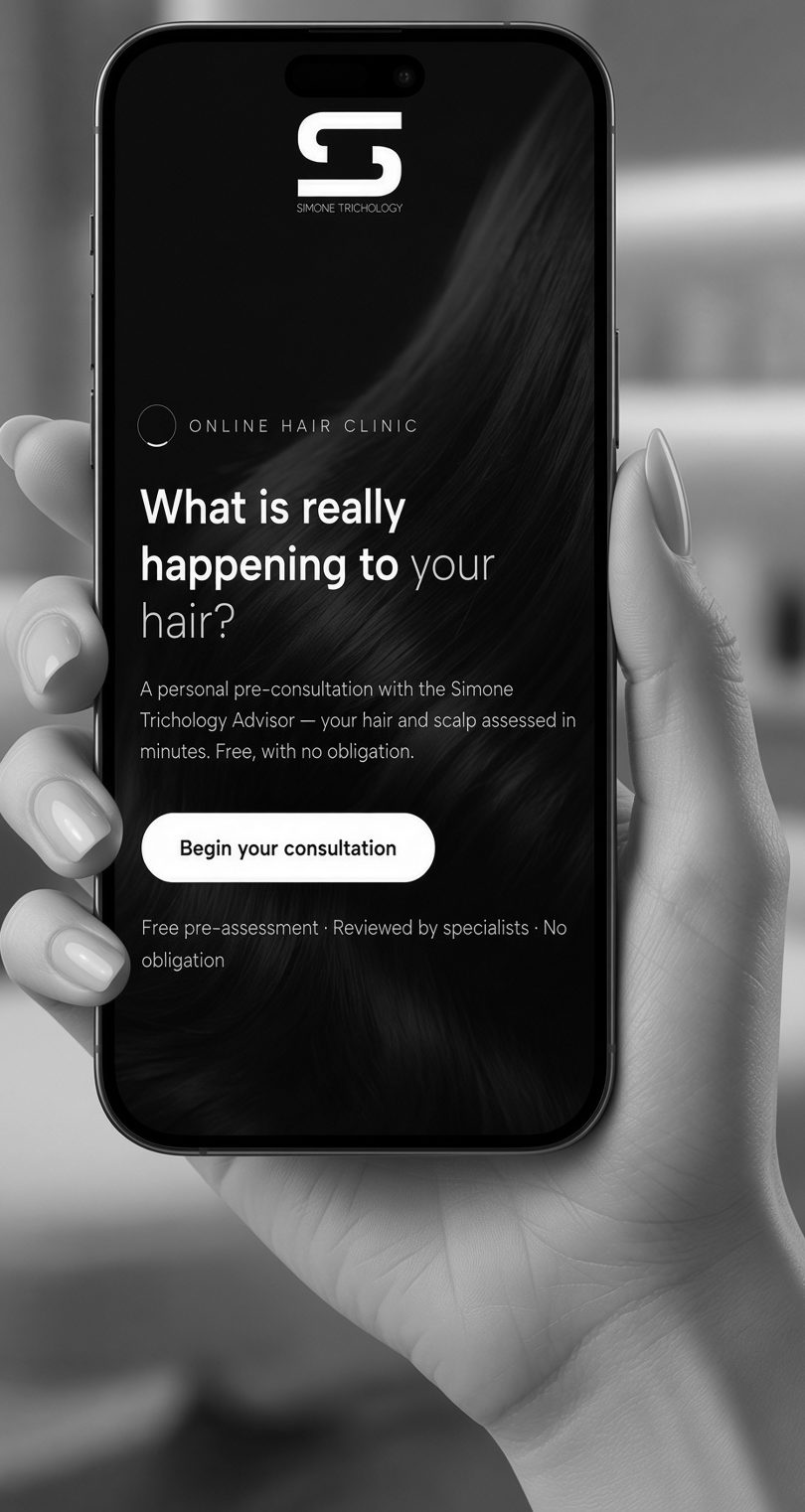
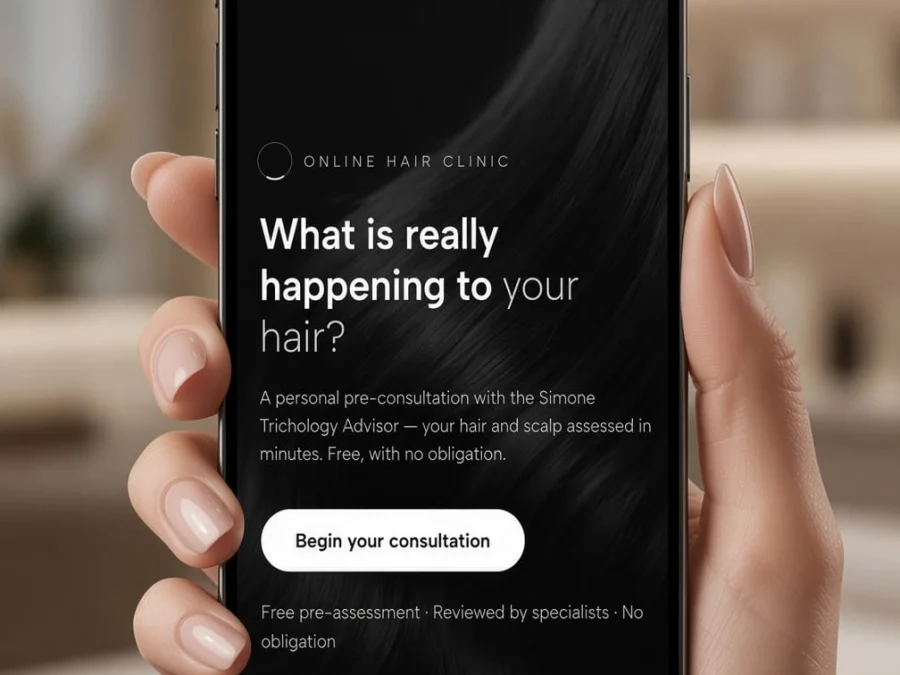
A first assessment of your hair and scalp does not have to cost anything: SIMONE TRICHOLOGY’s online Hair Clinic is free, with no obligation to buy.
How to get a hair and scalp analysis online
A full trichoscopic examination with a dermatoscope is carried out in person. What can be done online is a first assessment based on photographs and a short questionnaire, and this is what our free online Hair Clinic offers: you share three photographs of your scalp and a few details about your concern, a trichology specialist reviews your case personally and sends you a personalised assessment with a recommended dermocosmetic routine by email — at no cost and with no commitment. If an in-person examination would be worthwhile, we tell you.
You can also use the SIMONE Hair Scanner app, which guides you through three photographs of your hair and scalp with your phone and returns a personalised dermocosmetic protocol in minutes — free, in eight languages. Neither the app nor the online clinic gives a medical diagnosis; both are a practical way to understand your concern and to decide whether to see a professional.
Start your free hair assessment →Trichoscopy for professionals
If you are a trichologist, a dermatology practice, a pharmacy or a salon that wants to offer trichoscopy, SIMONE supplies dermatoscopes for hair and scalp trichoscopy with polarised light and a smartphone adapter, together with SIMONE PRO software for recording and comparing your clients’ images over time.
Frequently asked questions
No. The dermatoscope is placed on the surface of the scalp; nothing is plucked or injected. The examination takes a few minutes. Trichoscopy examines the scalp and the hair in place, under magnification, without removing anything. A trichogram plucks a small sample of hairs and examines them under a microscope to count the growth phases. Trichoscopy is non-invasive and repeatable and has largely replaced the trichogram in everyday practice. The magnified examination itself needs a dermatoscope on the scalp, so it is done in person. A first assessment from photographs and a questionnaire can be done online — SIMONE’s Hair Clinic does this free of charge — and it tells you whether an in-person examination is worthwhile. To follow a care routine, every three to four months at the same spot on the scalp is enough to see whether the appearance of density and thickness is changing. A dermatologist may set a different interval for a medical condition. No. The Hair Clinic and the SIMONE app help you understand your hair and scalp and choose a cosmetic routine; they do not diagnose or treat any medical condition. If you have redness, pain, scarring, sudden or patchy hair loss, please see a dermatologist.Does a trichoscopy hurt?
What is the difference between trichoscopy and a trichogram?
Can a trichoscopy be done online?
How often should a trichoscopy be repeated?
Does SIMONE’s online assessment replace a dermatologist?
SIMONE TRICHOLOGY products are cosmetic products and are not intended to diagnose, treat, cure or prevent any medical condition. If you are concerned about a medical condition affecting your hair or scalp, please consult a qualified healthcare professional.