


The quick answer: there is no good evidence that creatine causes hair loss. The worry comes from a single small 2009 study in rugby players, which found a rise in the hormone DHT after high-dose creatine – but it never measured hair. In 2025, a 12-week randomised controlled trial that did measure hair found no differences in DHT, hair density, follicular unit counts or hair thickness between men taking 5 g of creatine a day and men taking a placebo. If your hair is thinning while you train, the likeliest explanation is male pattern hair loss that was going to show anyway – or another trigger worth looking into.
“Creatine hair loss” is a perennial UK search, and this autumn the related query “creatine and hair loss” has been climbing again on Google Trends. The forums are full of it: in early November, one of the most-discussed posts of the month on Reddit’s r/tressless hair loss community was titled “Creatine made me go back 1.5 years of progress”. Many young men now face a choice between a supplement they like and the hair they want to keep. Here is what the science actually shows. For the wider picture, see our guide to male pattern baldness.
Where the creatine–hair loss link came from
In 2009, researchers in South Africa studied 20 college-aged rugby players in a crossover design: each player took creatine in one phase and a placebo in another. On creatine they took a loading dose of 25 g a day for seven days, followed by 5 g a day for another fortnight. Their levels of dihydrotestosterone (DHT) rose by 56% after the loading week and stayed 40% above baseline after the maintenance phase; the ratio of DHT to testosterone also rose. Testosterone itself did not change.
DHT is the hormone that, in genetically sensitive follicles, drives the miniaturisation behind male pattern hair loss. So the headline “creatine raises DHT” quickly became “creatine makes you bald” – even though:
- the study was very small (20 men);
- it did not measure hair at all;
- it used a high loading dose; and
- until 2025, no study had looked directly at hair in people taking creatine.
The 2025 trial that finally measured hair
In 2025, the Journal of the International Society of Sports Nutrition published a randomised, placebo-controlled trial designed specifically to answer the hair question. Resistance-trained men aged 18–40 took either 5 g of creatine monohydrate or a placebo (maltodextrin) every day for 12 weeks. Of 45 men recruited, 38 completed the study. The researchers measured blood levels of total and free testosterone and DHT, and assessed hair with a trichogram and a FotoFinder imaging system – hair density, follicular unit count and cumulative hair thickness.
| 2009 rugby study | 2025 randomised trial | |
|---|---|---|
| Participants | 20 rugby players (crossover: creatine and placebo phases) | 45 recruited, 38 completed (resistance-trained men) |
| Dose | 25 g a day for 7 days, then 5 g a day for 14 days | 5 g a day for 12 weeks |
| DHT | Rose (+56%, then +40%) | No significant difference vs placebo |
| Hair measured? | No | Yes – density, follicular units, thickness |
| Hair result | Not assessed | No significant difference vs placebo |
A single 12-week trial in 38 men cannot rule out every possible effect – longer and larger studies would still be welcome – but it is direct evidence on hair, which is more than the original claim ever had. Reviews by sports-nutrition researchers had already concluded that the available evidence does not show creatine causes hair loss.
So why do so many lifters say creatine made them lose hair?
I take these stories seriously – the worry is real. But in clinic, there are usually better explanations:
- Timing. Most men start creatine between 18 and 30, which is exactly when male pattern hair loss often begins. Two things starting together does not mean one caused the other. See receding hairline vs mature hairline and thinning crown for the early signs.
- Genetics. Pattern hair loss is strongly inherited – our article is baldness genetic? explains why it is not only your mother’s side.
- Diet and cutting. Aggressive cutting phases, very low calorie intake or not eating enough protein can trigger shedding two to three months later – see telogen effluvium and protein for hair loss.
- Other products. Anabolic steroids and other testosterone-boosting compounds act very differently from creatine, and androgens are known to accelerate pattern hair loss in men who are prone to it. Some “stacked” pre-workout or bulking products also contain more than creatine – check the label.
- Noticing. Once you have read that creatine causes hair loss, you look at your hairline in the gym mirror under harsh lights every day.
Should you stop taking creatine?
That is your decision, and it is worth discussing with your GP or a registered dietitian, especially if you have kidney problems or are under 18. Based on the current evidence, I do not tell clients that creatine is the cause of their thinning. If you are anxious and decide to stop, that is fine too – but keep tracking your hair, because if it keeps changing after you stop, creatine was not the issue.
What I do recommend:
- Stick to the standard dose. The 2025 trial used 5 g a day; there is no need for a high-dose loading phase.
- Start a photo log. Front, temples and crown, in the same light, every three months.
- Look at the whole picture. Sleep, stress, calorie deficit, protein intake and any other supplements. A blood test for hair loss can be worth discussing with your GP if you are shedding heavily.
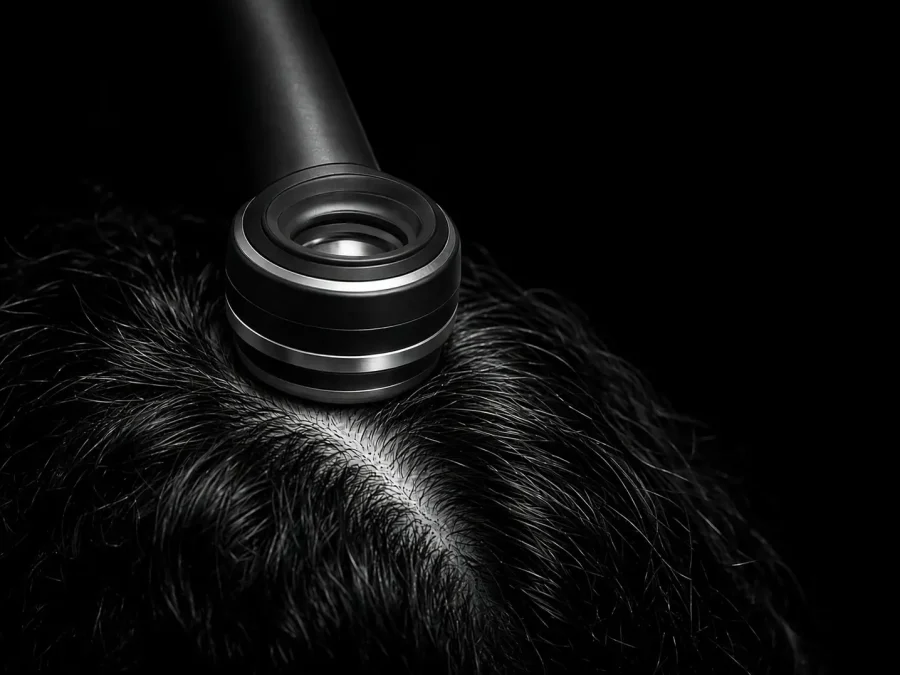
- Get assessed if it keeps going. A hair and scalp analysis shows whether there is miniaturisation (pattern loss) or all-over shedding.
Looking after your hair while you train
Sweat, caps and frequent showers are part of gym life. Washing your hair after training is fine – see how often should you wash your hair – as long as you use a gentle, appropriate shampoo.
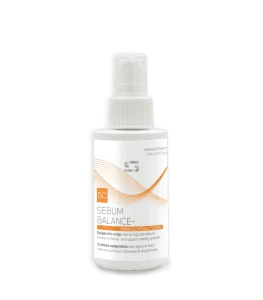
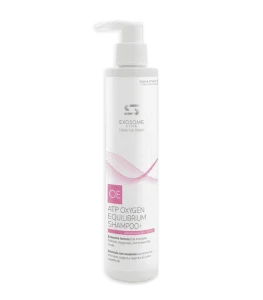
If assessment confirms pattern thinning, our usage protocol prepares the scalp once or twice a week with Dermo Capillary Mask Activated Plus, washes 3–4 times a week alternating Hair Loss Prevention Shampoo Plus and Hair Nutrient Royal Jelly Shampoo Plus, and uses PROALOPEX+ as the core leave-in, daily or 5 times a week for 12 weeks and then 3 times a week. Where there is active shedding on top – after a hard cut, for example – Dixidox Forte Advance Plus can be added morning and evening for 10 days, then once a day or 3–5 times a week for 6–8 weeks. The full routine, which runs for around 11 months, is in our male pattern baldness guide.
Our shampoos, conditioners and masks are made with the TFD System; the leave-in serums have their own formulas without exosomes. These products are cosmetics: they support a healthier-looking scalp and help hair look fuller and denser.
Your questions answered
Does creatine cause hair loss?
Current evidence says no. A 2025 randomised controlled trial found no differences in DHT, hair density, follicle counts or hair thickness after 12 weeks of 5 g a day compared with placebo. The fear comes from a 2009 study that measured DHT but not hair.
Does creatine increase DHT?
One small 2009 study in 20 rugby players found DHT rose after a high-dose loading phase; it did not look at hair. The 2025 trial, using 5 g a day without loading, found no significant change in DHT.
I’m already losing hair. Is creatine safe for me?
There is no evidence that creatine speeds up male pattern hair loss, but research is still limited. If you are concerned, discuss it with your GP, keep to a standard dose and track your hair with regular photos.
Will stopping creatine make a difference to my hair?
If creatine was not the cause – which is most likely – stopping it will not change pattern hair loss. If your thinning was shedding caused by a crash diet or stress, it usually settles once the trigger passes, whether or not you take creatine.
Is creatine loading worse for hair?
The only study linking creatine to higher DHT used a 25 g-a-day loading phase, and it did not measure hair. Loading is not necessary to benefit from creatine, so a standard daily dose is the simplest option.
Sources
- van der Merwe J, Brooks NE, Myburgh KH. Three weeks of creatine monohydrate supplementation affects dihydrotestosterone to testosterone ratio in college-aged rugby players. Clinical Journal of Sport Medicine 2009.
- Lak M et al. Does creatine cause hair loss? A 12-week randomized controlled trial. Journal of the International Society of Sports Nutrition 2025.
- Antonio J et al. Common questions and misconceptions about creatine supplementation: what does the scientific evidence really show? Journal of the International Society of Sports Nutrition 2021.
- Reddit, r/tressless. “Creatine made me go back 1.5 years of progress”. 7 November 2026.
- British Association of Dermatologists. Hair loss – male pattern (androgenetic alopecia), patient information leaflet. Updated June 2024.
This article is for general information and does not replace advice from your GP, pharmacist, dietitian or another health professional. SIMONE TRICHOLOGY products are cosmetics, not medicines: they do not diagnose or correct male pattern hair loss or any other medical condition. If you are worried about your hair loss, please speak to your GP.