







The quick answer: men report hair shedding on weight-loss jabs far less often than women – in US prescribing information for tirzepatide, 0.5% of men compared with 7.1% of women. But a genetic study published in September 2026 suggested that GLP-1 activity might slightly raise the odds of male pattern hair loss (by about 7%), and a large US records study found more pattern hair loss diagnoses in people taking these medicines. Neither proves the medicines cause balding, and the authors say the real-world importance is uncertain. If you are thinning at the temples or crown, the practical steps are the same as for any man with pattern thinning: get it assessed, consider medical options with your GP, and use a consistent scalp-care programme.
Since the study made headlines this autumn, more men have been asking me whether their jab is “making them go bald”. It is a fair question, and the answer is more nuanced than the headlines. This guide explains the difference between shedding and pattern thinning, what the new research actually found, whether DHT is involved and what you can do. For the full picture, see our hub guide to weight-loss jabs and hair loss.
Two different things: shedding and pattern thinning
| Feature | Diffuse shedding (telogen effluvium) | Male pattern hair loss (androgenetic alopecia) |
|---|---|---|
| Where | All over the head | Temples, hairline and crown |
| How it starts | Suddenly, 2–4 months after rapid weight loss or another trigger | Gradually, over years |
| What you notice | More hairs in the shower and on the pillow | Receding temples, a thinner crown, finer hairs |
| Course | Usually temporary; settles over months | Long-term and gradual |
| Main drivers | Physical stress, eating much less, low iron | Genes and the follicles’ sensitivity to androgens such as DHT |
The two can overlap: a bout of shedding can make existing pattern thinning look suddenly worse. Our Mounjaro hair loss timeline shows when shedding typically starts and settles. Our guide to telogen effluvium explains shedding in more detail, and hair shedding vs hair loss helps you tell them apart.
What the new studies found
The genetic study (September 2026)
Researchers in the US, publishing in the Journal of Investigative Dermatology, used a method called Mendelian randomisation. Instead of following people who take a medicine, it looks at natural genetic differences that slightly raise or lower activity of the GLP-1 receptor – the target of these medicines – and checks whether those differences go with more or less male pattern hair loss in large genetic databases. They found that higher GLP-1 receptor activity was associated with about 7% higher odds of male pattern hair loss (odds ratio 1.07).
That is a small effect, and genetic “lifelong” differences are not the same as taking a medicine for a year or two. The authors themselves said the clinical relevance is uncertain and that more research is needed.
Health-record studies
- A multicentre US study using the TriNetX records network (JAAD International, 2026) found higher odds of both telogen effluvium and androgenetic alopecia diagnoses in people prescribed GLP-1 medicines over 12 months than in comparable people who were not.
- A BMJ study (July 2026) of adults with type 2 diabetes found more new alopecia diagnoses with GLP-1 medicines than with two other types of diabetes medicine.
Studies like these can show an association, but they cannot fully separate the medicine from rapid weight loss, diet changes, or the fact that people on these medicines may see doctors more often and so have hair loss recorded more often.
So, does it cause balding?
The honest answer today: it has not been shown. If there is a direct effect on pattern hair loss, the current evidence suggests it is small. For most men, shedding during rapid weight loss remains the more likely explanation for noticing more hair in the plughole.
Is DHT involved?
Male pattern hair loss depends on genes and on how sensitive the follicles are to androgens, particularly dihydrotestosterone (DHT). Researchers have suggested that GLP-1 activity might influence pattern hair loss indirectly – for example through changes in body fat, insulin and growth-factor signalling, blood pressure or testosterone – but this is a hypothesis. No study so far has shown that weight-loss jabs raise DHT. If you take, or are thinking of taking, a medicine for pattern hair loss, discuss it with your GP or the prescriber of your weight-loss medicine.
What to look out for
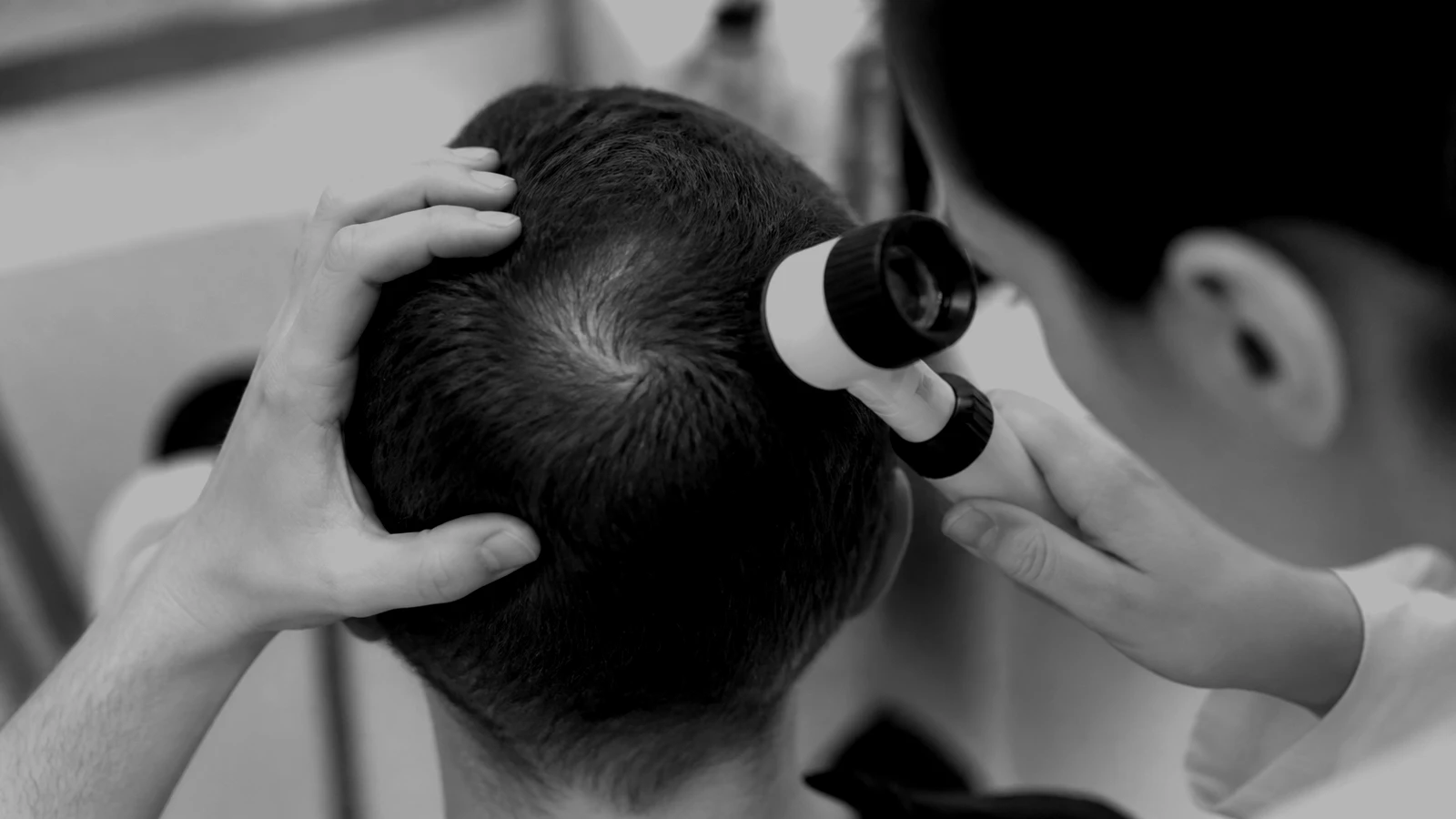
- Temples receding further or a hairline becoming more uneven.
- A crown that looks see-through under bright light.
- Hairs becoming finer and shorter in those areas.
- A family history of baldness on either side.
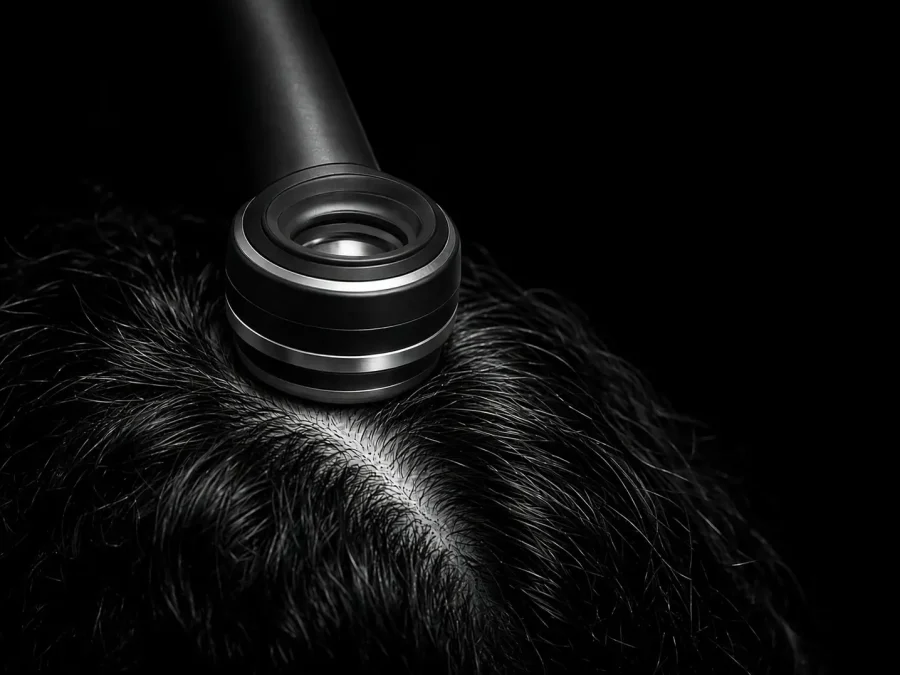
Take photos of your hairline (from the front and both sides) and crown every four weeks in the same light. If the pattern is gradually changing, rather than just more hairs falling everywhere, it is worth getting it assessed – our free online Hair Clinic can review three photos, and our article on hair analysis explains what a full assessment involves.
What men can do
1. Keep the medical side with your doctor
Do not stop or change your weight-loss medicine because of your hair without talking to your prescriber. If you are concerned about pattern thinning, your GP or a dermatologist can confirm what is happening and discuss licensed medical options and whether they suit you alongside your other medicines.
2. Eat for your hair while you lose weight
Low protein and low iron are common when appetite drops. See our guide to protein for hair while losing weight.
3. Follow a consistent scalp-care programme
For pattern thinning, our usage protocols build a long-term programme of around 11 months:
- Base: PROALOPEX+ daily or 5 times a week for 12 weeks, then 3 times a week. Read more in PROALOPEX for pattern thinning.
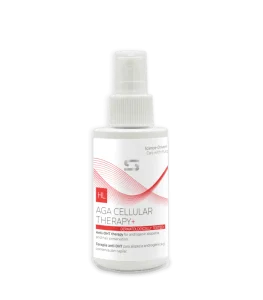
- Complement for an oily scalp: AGA Cellular Therapy Plus daily or 5 times a week for 8–12 weeks, then 3 times a week.
- When shedding overlaps: a 10-day “shock” phase with Dixidox Forte Advance Plus morning and evening, then once a day or 3–5 times a week for 6–8 weeks.
- Wash: Hair Loss Prevention Shampoo Plus alternated with Hair Nutrient Royal Jelly Shampoo Plus, 3–4 times a week, with Dermo Capillary Mask Activated Plus in micro-peel mode 1–2 times a week.
These help keep the scalp balanced and help hair look fuller and denser; they are cosmetics and work alongside, not instead of, medical advice. The full routine, with a sample week, is in a hair-care routine for weight-loss jabs. You can also browse the Thinning Hair & Hair Loss Care range.
When to see your GP
See your GP if your hair loss is sudden or heavy, if you notice round bald patches, a sore, red or scaly scalp, or if hair loss comes with other symptoms such as tiredness, low mood or reduced sex drive. Mention any weight-loss medicine you are taking. Hair loss that is clearly following a male pattern can also be discussed with your GP if it is worrying you.
Your questions answered
Does Mounjaro or Wegovy cause hair loss in men?
Men report it much less often than women: in US prescribing information for tirzepatide, 0.5% of men reported hair loss compared with 7.1% of women. When it happens it is usually temporary shedding linked to rapid weight loss.
Do GLP-1 medicines raise DHT?
There is no evidence so far that weight-loss jabs raise DHT. Researchers have suggested possible indirect links with pattern hair loss through metabolic and hormonal changes, but this is a hypothesis that still needs to be tested.
What did the 2026 GLP-1 hair loss study find?
A genetic study published in the Journal of Investigative Dermatology in September 2026 found that higher GLP-1 receptor activity was associated with about 7% higher odds of male pattern hair loss. The authors said the clinical relevance is uncertain.
Is it shedding or male pattern baldness?
Shedding is sudden and all over the head, usually 2–4 months after rapid weight loss, and settles over months. Pattern thinning develops gradually at the temples, hairline and crown. The two can overlap, so if the pattern keeps changing, get it assessed.
Can I use a hair-loss medicine while on a weight-loss jab?
Ask your GP or pharmacist. They can check whether a medical option for pattern hair loss suits you alongside your other medicines. Do not stop or change your weight-loss medicine without talking to your prescriber.
Which scalp-care programme do you suggest for men with pattern thinning?
Our protocols use PROALOPEX+ daily or 5 times a week for 12 weeks, then 3 times a week, as the long-term base, with AGA Cellular Therapy Plus as a complement for an oily scalp and a programme of around 11 months. They are cosmetics and help hair look fuller and denser alongside medical advice.
Sources
- Ramessur R, Spindler A, et al. A causal effect of increased GLP1R expression on male-pattern hair loss is suggested by 2-sample Mendelian randomization. J Invest Dermatol 2026. doi:10.1016/j.jid.2026.07.024.
- Vidal SI, et al. Increased risk of hair loss with GLP-1 receptor agonists: a real-world multicenter TriNetX cohort study. JAAD Int 2026.
- Tang H, et al. Target trial emulation of hair loss risk with GLP-1 receptor agonists in adults with type 2 diabetes. BMJ, 22 July 2026. doi:10.1136/bmj-2026-100077. Science Media Centre expert reaction.
- Drugs.com. Do Ozempic, Wegovy, Mounjaro & Zepbound cause hair loss? (summary of US prescribing information).
- NHS. Hair loss.
This article is for general information and does not replace advice from your doctor or pharmacist. SIMONE TRICHOLOGY does not sell or recommend weight-loss medicines. SIMONE TRICHOLOGY products are cosmetics and are not intended to diagnose, treat or prevent any medical condition. If your hair loss is sudden, patchy or worrying you, please speak to your GP or a dermatologist.