
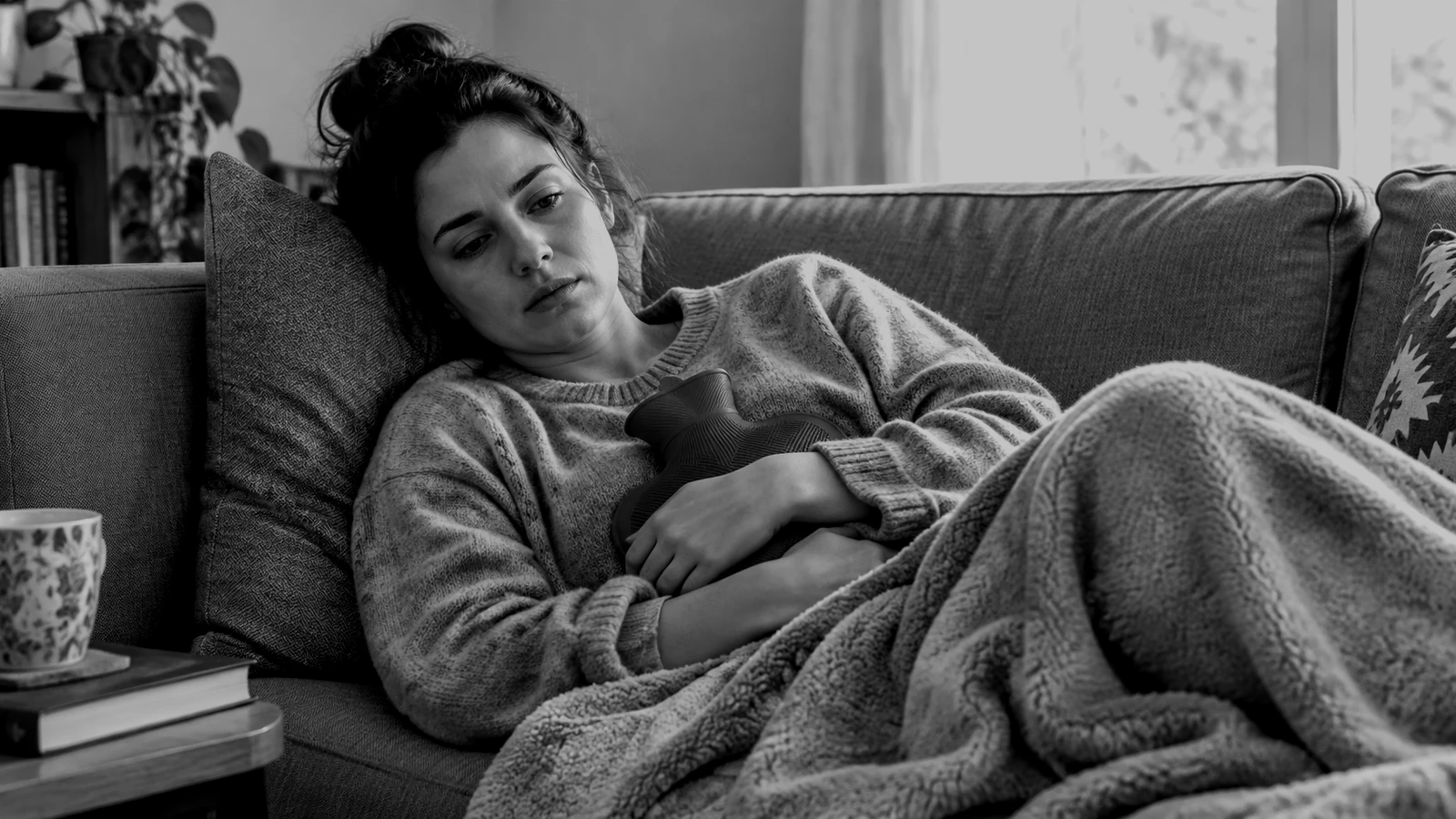
The quick answer: heavy periods do not damage hair directly, but they are one of the most common reasons women run low on iron – and low iron stores are a recognised trigger for diffuse shedding. If you have heavy periods and your hair is coming out more than usual, ask your GP about a full blood count and ferritin test; NICE recommends a full blood count for every woman with heavy menstrual bleeding. Heavy periods can also share a cause with hair changes, such as an underactive thyroid or PCOS, so it is worth looking at the whole picture. Once the bleeding and the iron are addressed, shedding usually settles over the following months.
When a client tells me her hair has been shedding for months, one of my first questions is about her periods. It can feel like an odd question to be asked by a hair specialist, but the link is real and often overlooked: periods can become heavier gradually, and many women simply get used to it. The recent “ferritin face” trend has put iron in the spotlight; this article explains how heavy periods fit in, how to tell whether yours count as heavy and what to ask your GP. For the full picture on iron, see our guide to iron deficiency and hair loss.
How heavy periods can lead to hair shedding
Blood is rich in iron, so every period uses some of your iron stores. With a heavy flow, month after month, the body can lose iron faster than diet replaces it. The NHS describes heavy periods and pregnancy as very common causes of iron deficiency anaemia, and the British Society of Gastroenterology lists menstrual losses as a major factor in young women.
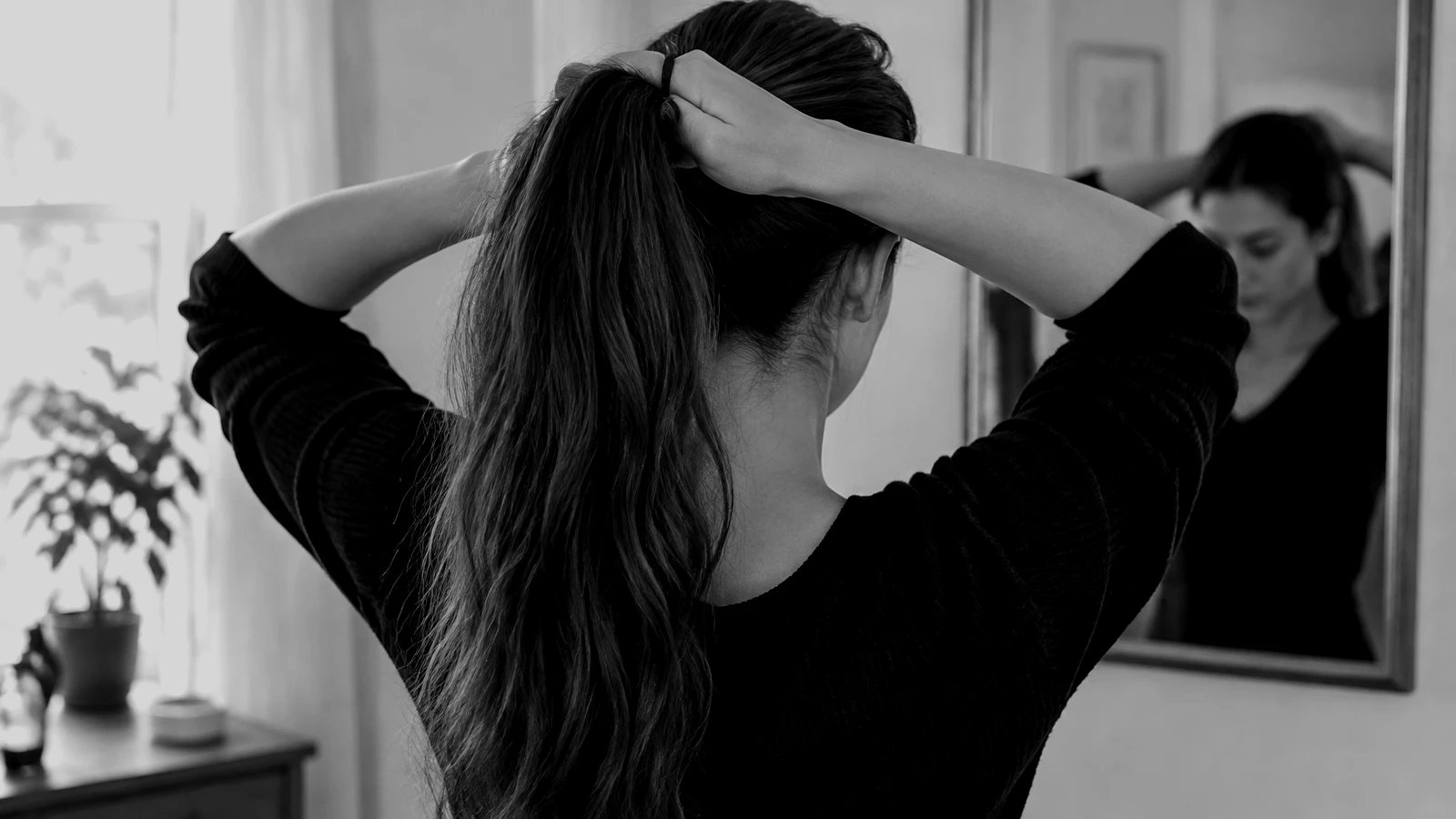
As your stores (ferritin) fall, the body prioritises vital organs over hair follicles. More hairs than usual move into their resting phase and are shed around two to three months later – a reactive shedding called telogen effluvium. Because the loss is spread over the whole scalp, many women notice it first as a thinner ponytail or more hair in the plughole rather than a visible patch.
Are your periods heavy?
Heavy periods are common and may be normal for you, but the NHS says you may have heavy periods if you:
- need to change your pad or tampon every 1 to 2 hours, or empty your menstrual cup more often than recommended;
- need to use two types of period product together, such as a pad and a tampon;
- have periods lasting more than 7 days;
- pass blood clots larger than about 2.5 cm (the size of a 10p coin);
- bleed through to your clothes or bedding;
- avoid daily activities, or take time off work, because of your periods;
- feel tired or short of breath a lot.
That last point is the bridge to your hair: tiredness and breathlessness are also among the most common symptoms of iron deficiency anaemia.
When heavy periods and hair loss share a cause
Sometimes heavy bleeding and hair changes are two symptoms of the same underlying issue:
| Possible link | Effect on periods | Effect on hair | What helps you find out |
|---|---|---|---|
| Iron deficiency | Caused or worsened by heavy bleeding | Diffuse shedding, thinner ponytail | Full blood count and ferritin |
| Underactive thyroid | The NHS lists irregular or heavy periods as a symptom | The NHS lists dry hair or hair loss as a symptom | Thyroid blood test |
| PCOS (also called PMOS) | The NHS lists it among causes of heavy periods; periods are often irregular | Can be linked with thinning on the top of the head | GP assessment and hormone tests |
| Perimenopause | Periods can become heavier as you approach the menopause | Hormonal shifts can make hair finer and thinner | GP review of symptoms; see our menopause and hair thinning guide |
| Fibroids, endometriosis or adenomyosis | Common causes of heavy bleeding | Indirectly, through iron loss | GP assessment and, if needed, a referral |
This is why it pays to mention both symptoms in the same appointment, rather than treating your hair and your periods as separate problems.
What to ask your GP
- Tell them about both. “My periods are heavy and my hair has been shedding for three months” gives your GP far more to work with than either symptom alone.
- Ask about blood tests. NICE guidance on heavy menstrual bleeding recommends a full blood count for all women with heavy periods. Ask whether a ferritin test is appropriate too, as stores can be low even when the full blood count is normal – see ferritin levels and hair. Our guide to blood tests for hair loss covers the other tests that may be considered.
- Ask about the bleeding itself. Heavy periods do not always need medical help, but the NHS lists several options a GP can offer if they are affecting your life, including some types of contraception and medicines that reduce bleeding. Fixing the iron without addressing the blood loss often means the stores run down again.
- See your GP promptly if you bleed between periods or after sex, have severe pain, or have heavy periods with other new symptoms – the NHS advises getting these checked.
How long until your hair settles?
Hair runs about three months behind your body. Once heavy bleeding is under control and your iron stores start to rise, many women notice their energy returning first. Shedding typically eases over the following three to six months, and the ponytail gradually feels fuller over six to twelve months as new hairs gain length – new hair grows roughly a centimetre a month. If shedding carries on after your iron is back in range, ask your GP or a trichologist to look for another cause.
A hair-care routine for the recovery months
Our cosmetic routine does not change your iron levels or your periods, but it does help hair look its best while your body recovers. Our protocol for diffuse shedding:
- Prepare (1–2 times a week, before washing): Dermo Capillary Mask Activated Plus in micro-peel mode – apply to a dry or slightly damp scalp, massage 1–2 minutes, leave 3–5 minutes (2–3 if sensitive) and rinse well.
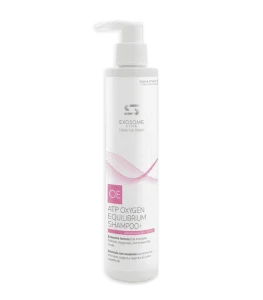
- Wash (3–4 times a week): alternate Hair Loss Prevention Shampoo Plus and Hair Nutrient Royal Jelly Shampoo Plus; massage 1–2 minutes, leave 2–3 minutes, rinse with lukewarm water.
- Leave-in, chosen by type:
- sudden, heavy shedding: Dixidox Forte Advance Plus, morning and evening for 10 days, then once a day or 3–5 times a week for 6–8 weeks;
- gradual, all-over loss of density: DNA Hairmax Pro Plus, daily or 5 times a week for 8–12 weeks, then 3 times a week;
- around the menopause or after having a baby: Royal Jelly Hair Activator Plus, daily or 5 times a week for 8–12 weeks (a 2–3 month programme), then 3 times a week.
Apply leave-ins to a clean, dry or slightly damp scalp in sections and massage for 1–2 minutes without rinsing. Our shampoos, conditioners and masks are made with the TFD System; the leave-in serums have their own formulas and contain no exosomes. If your hair is coloured, Hair Loss & Colors Shampoo Plus is an optional colour-friendly extra; for fine, flat hair, Volume Therapy Shampoo Plus is an optional extra for root lift.
Gentle habits matter too: loose styles rather than tight ponytails, a wide-tooth comb from the ends upwards, and monthly photos of your parting to track progress honestly. If you would like your scalp assessed, our hair clinic can help. And if social media made you wonder about your iron in the first place, read ferritin face: fact or fiction.
Your questions answered
Can heavy periods cause hair loss?
Indirectly, yes. Heavy periods are one of the most common causes of low iron in women, and low iron stores are a recognised trigger for diffuse hair shedding. A full blood count and ferritin test can show whether this applies to you.
How do I know if my periods are heavy enough to affect my iron?
The NHS describes heavy periods as needing to change a pad or tampon every 1–2 hours, periods lasting more than 7 days, clots larger than a 10p coin or flooding through to clothes. Feeling tired or short of breath a lot is another clue. Only a blood test can confirm your iron levels.
Will my hair thicken up again once my periods are lighter?
In most cases, yes, gradually. Once blood loss and iron stores are addressed, shedding usually eases over three to six months, and the hair feels fuller over six to twelve months as new hairs gain length.
Can perimenopause cause heavy periods and hair thinning at the same time?
Yes. Periods can become heavier as you approach the menopause, and hormonal changes can make hair finer. Heavier bleeding can also lower iron stores, so it is worth asking your GP to look at both.
Should I take iron tablets if I have heavy periods?
Ask your GP first. The NHS notes that women with heavy periods are at higher risk of iron deficiency anaemia and may need supplements, but a blood test shows whether you need them and at what dose.
Sources
- NHS. Heavy periods.
- NHS. Iron deficiency anaemia.
- NHS. Iron – vitamins and minerals.
- NHS. Underactive thyroid (hypothyroidism): symptoms.
- NICE. Heavy menstrual bleeding: assessment and management (NG88) – recommendations.
- Snook J, Bhala N, Beales ILP, et al. British Society of Gastroenterology guidelines for the management of iron deficiency anaemia in adults. Gut 2021;70:2030–2051.
- The Guardian. ‘Ferritin face’: are social media claims about iron deficiency fact – or fiction? 28 October 2026.
This article is for general information and does not replace advice from your GP or another health professional. SIMONE TRICHOLOGY products are cosmetics, not medicines: they do not diagnose or correct iron deficiency, heavy periods or any other medical condition. If your periods are heavy, painful or have changed, or you bleed between periods or after sex, please speak to your GP.