


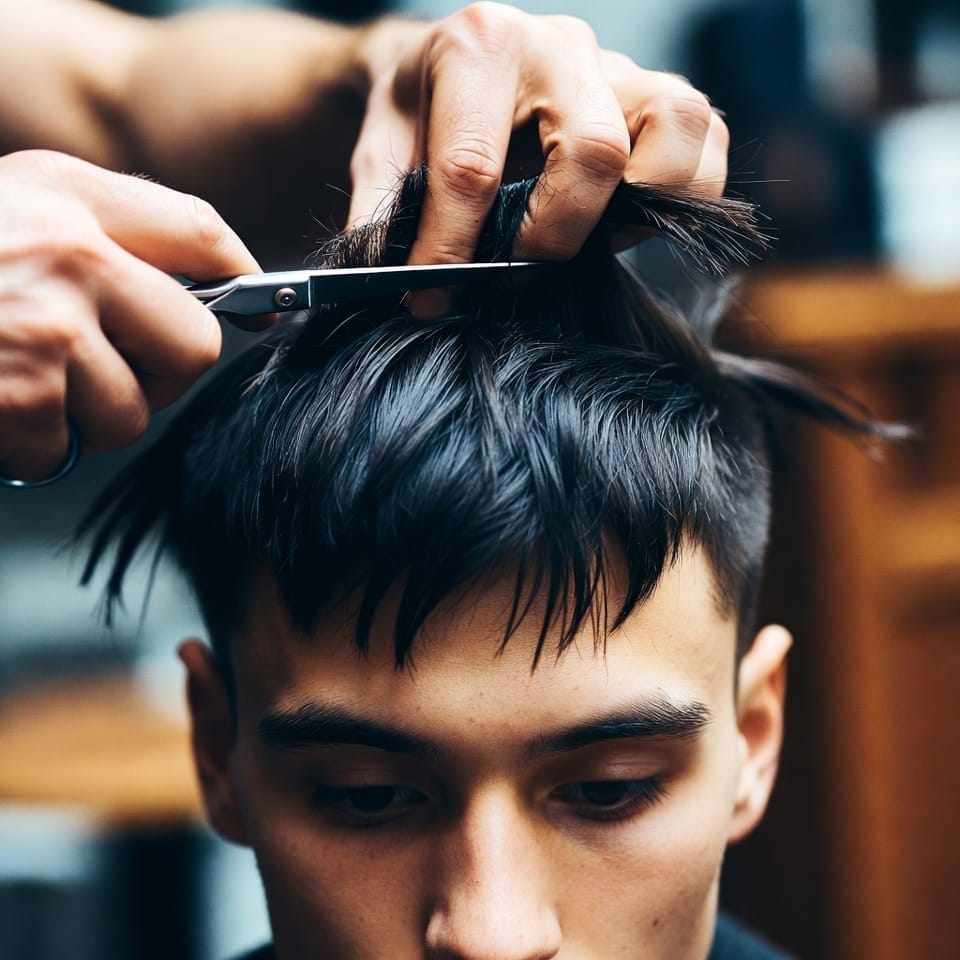
No. Cutting your hair does not make it grow faster, thicker or stronger at the root. Hair grows from follicles inside the scalp, while a haircut only removes part of the visible hair shaft. Cutting cannot change the follicle, its growth cycle or the natural diameter of the hair it produces.
A trim can still make hair look fuller, feel stronger and retain more length. Removing thin, split or damaged ends reduces breakage and leaves a cleaner, blunter edge. This cosmetic improvement explains why many people believe their hair grows faster after a haircut, even though its biological growth rate has not changed.
What really controls hair growth?
Hair growth begins inside the hair follicle, beneath the surface of the scalp. Each follicle follows a repeating cycle of growth, transition, rest and shedding. The length and activity of this cycle are influenced by factors such as genetics, age, hormones, general health, nutrition, certain medications and some hair or scalp conditions.
Scalp hair grows at an average rate of approximately one centimetre per month, although this varies between individuals. Cutting the ends more frequently does not accelerate the process.
The visible part of the hair—the hair shaft—consists mainly of keratinised cells. Once it has emerged from the scalp, it cannot send a signal back to the follicle or alter the speed at which new hair is produced. You can learn more about this process in our guide to hair structure and the hair growth cycle.
Why can freshly cut hair feel thicker or harder?
A haircut can change how the hair feels without changing how it grows. An uncut strand usually becomes finer and more tapered towards its end. Cutting across that strand creates a blunt edge, which can feel coarser or thicker when touched.
Shorter strands also bend less easily than longer ones, so newly cut hair may feel stiffer or “harder”. This effect is especially noticeable after a very short haircut or shaving. However, the diameter, number and activity of the follicles remain unchanged.
Therefore, cutting hair does not:
- increase the number of hair follicles;
- make individual follicles produce thicker hair;
- extend the active growth phase;
- prevent genetically or hormonally influenced hair loss;
- make hair grow back faster.
What does cutting your hair actually do?
It removes damaged and split ends
Heat, colouring, bleaching, friction, vigorous brushing and normal weathering can gradually weaken the hair fibre. The oldest part of long hair is found at the ends, which is why this area is usually the first to become dry, rough, tangled or split.
Trimming removes the most damaged part of the fibre. This can give the lengths a more even appearance and stop badly split ends from continuing to fracture farther along the shaft.
It can reduce breakage and help retain length
Hair may be growing normally at the scalp while repeatedly breaking at the ends. When this happens, it can seem as though the hair has stopped growing.
Removing fragile ends and treating the remaining fibre gently can reduce breakage. You may then retain more of the length produced by the follicles. The hair has not grown faster; less of its existing length has been lost.
It can make hair look fuller
Thin, uneven or transparent ends can make the lower part of the hair appear sparse. A well-positioned cut creates a more uniform edge, making the hairstyle look denser and healthier immediately. This is a visual effect rather than an increase in the number or thickness of hairs.
Hair growth, breakage and shedding are different
These three processes are often confused:
- Growth takes place inside the follicle and produces new hair fibre.
- Breakage occurs somewhere along the existing hair shaft, often because the fibre has become weakened.
- Shedding happens when a hair is released from the follicle as part of its natural cycle or because that cycle has been disrupted.
A haircut may help manage breakage, but it cannot treat excessive shedding or true hair loss. If your concern is reduced density rather than damaged ends, read our guide to the causes and signs of hair loss.
Can cutting your hair stop hair loss?
No. True hair loss and progressive thinning involve changes at follicle level. Depending on the condition, these may include alterations in the growth cycle, progressive follicular miniaturisation, hormonal or genetic influences, inflammation or autoimmune activity.
Cutting the hair shaft does not modify any of these processes and should not be considered a treatment for alopecia. A shorter hairstyle may make reduced density less obvious, but it does not correct its cause.
If you notice sudden shedding, bald patches, progressive thinning, scalp pain, burning, redness or persistent itching, seek an assessment from a dermatologist or qualified hair and scalp professional.
How often should you trim your hair?
There is no single trimming schedule that is right for everyone. The appropriate interval depends on your hairstyle, hair length, texture, degree of chemical processing, use of heat and the condition of the ends.
Rather than cutting according to the belief that it will stimulate growth, consider a trim when:
- split ends are clearly visible;
- the ends feel unusually dry or rough;
- the hair tangles or breaks more easily;
- the lower lengths have become thin or uneven;
- the shape of the haircut is becoming difficult to manage.
If you are trying to grow your hair longer, removing only the damaged portion can help preserve as much healthy length as possible.
What can genuinely support healthy growth and length retention?
Normal hair growth is better supported by caring for the scalp, follicles and existing fibre than by cutting more often.
- Choose a suitable cleansing routine. Wash according to your scalp type and degree of oil or product build-up.
- Handle wet hair gently. Wet fibres are more vulnerable to stretching and breakage.
- Limit excessive heat and aggressive chemical processing. Repeated damage can weaken the shaft and reduce length retention.
- Eat a balanced diet. Adequate protein, iron, zinc and other nutrients are important for normal hair production. Read more about how food can affect hair health.
- Avoid self-prescribing supplements. A supplement will not correct every cause of hair loss and excessive doses of some nutrients can be harmful.
- Investigate persistent changes. Hair loss has many possible causes, so an accurate assessment should come before treatment.
Healthy-looking growth starts at the scalp, while retaining length depends on protecting the fibre. Our guide to scalp health explains how to build a suitable routine.
Frequently asked questions
Does shorter hair grow faster than long hair?
No. Short and long hair grow from the follicle at the same biological rate. Short hair may appear to grow faster because a small increase in length is more noticeable.
Does shaving your head make hair grow back thicker?
No. Shaving creates a blunt edge that can initially feel coarser and look darker, but it does not change the diameter of the follicle or the rate of growth.
Can split ends stop hair growth?
Split ends do not stop the follicle from producing hair. However, damaged ends can continue breaking, meaning that new length gained at the scalp is lost from the bottom.
Does trimming make thin hair thicker?
A blunt cut can make thin hair look fuller by removing sparse or uneven ends. It does not increase the number of hairs or permanently change their natural diameter.
What should I do if my hair is not getting longer?
Look for signs of breakage, review heat and chemical exposure and consider whether there is increased shedding or reduced density. Persistent or unexplained changes should be professionally assessed.
The conclusion
Cutting your hair does not make it grow faster, thicker or stronger at the root. It can nevertheless be valuable because it removes damaged ends, reduces breakage and makes the lengths appear healthier and fuller.
If you are concerned about slow growth, excessive shedding or loss of density, our free online Hair Clinic offers a personalised preliminary assessment by a trichology specialist, with no cost and no obligation.
Sources and further reading
- Stenn KS, Paus R. Controls of hair follicle cycling. Physiological Reviews.
- American Academy of Dermatology — Tips for healthy hair
- Mayo Clinic — Does shaved hair grow back thicker?
- American Academy of Dermatology — Hair loss or excessive shedding?
This information is educational and does not replace an individual diagnosis or medical treatment. Consult a dermatologist or qualified healthcare professional if hair loss is sudden, persistent, patchy or accompanied by scalp symptoms.