
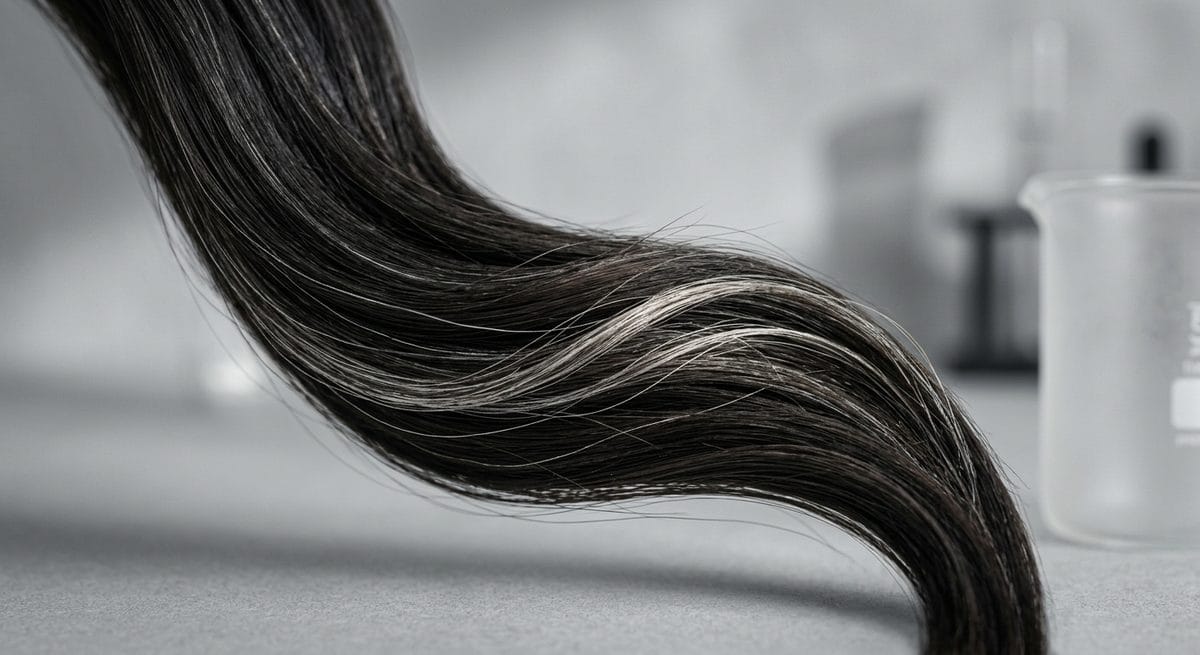
Hair does not age overnight. It ages the way skin does: gradually, quietly, on several levels at once — and usually without a single dramatic moment you can point to. One day the ponytail feels thinner, the texture is different, the shine takes more work. Understanding what is actually changing is the first step to supporting your hair through it.
This article is part of our guide to hair longevity, the prevention-first approach to long-term hair and scalp health.
How hair changes over the years
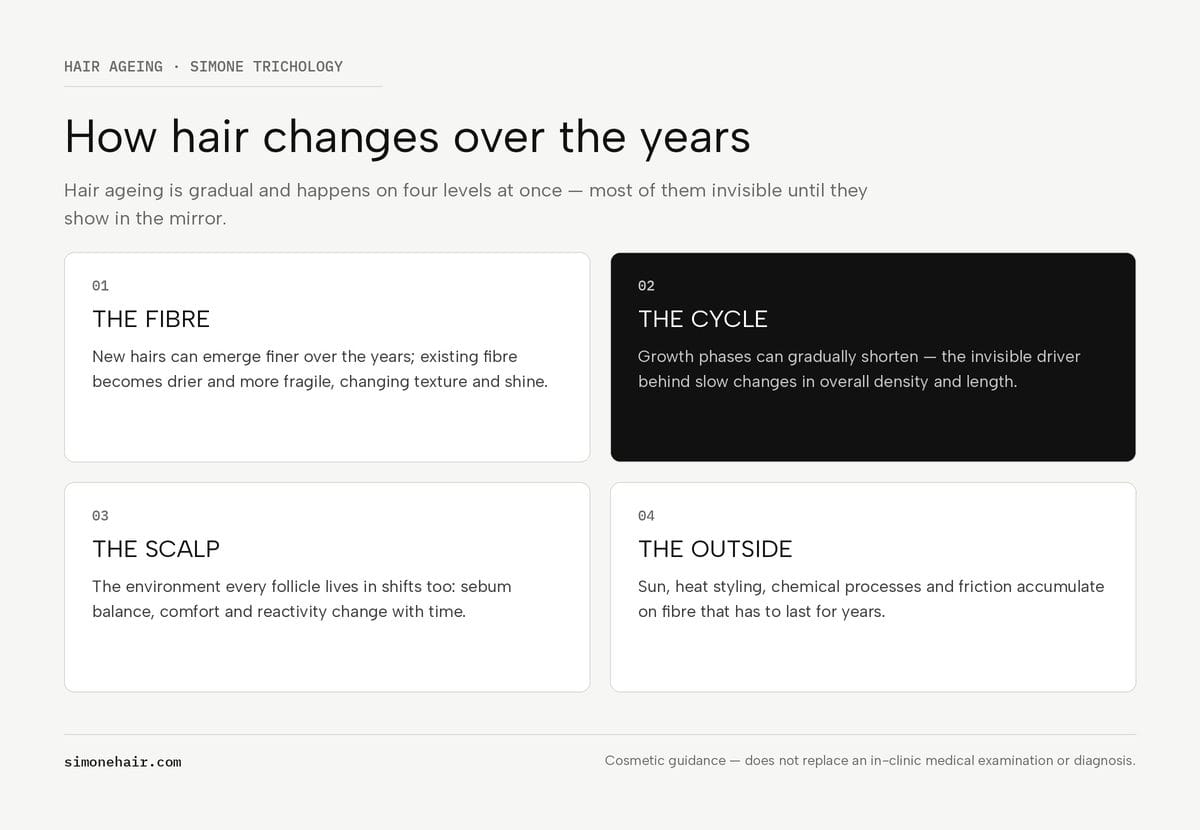
Hair ageing happens on four levels at once — most of them invisible until they show in the mirror:
- The fibre. New hairs can emerge finer than they used to, and existing fibre tends to become drier and more fragile. Texture, body and shine change as a result — the hair may feel different to the touch even before it looks different.
- The growth cycle. Each follicle works in repeating cycles of growth, rest and renewal. Over the years, growth phases can gradually shorten. This is the invisible driver behind slow changes in overall density and in how long the hair grows.
- The scalp. The skin your hair grows from changes too: sebum production shifts, and the scalp can become more reactive or less comfortable. We cover this in depth in our article on scalp longevity.
- The outside world. Sun exposure, heat styling, chemical processes and daily friction accumulate on fibre that has to last for years. Much of what we read as “ageing” in the lengths is, in fact, accumulated external wear.
Greying belongs in this picture too — it is a natural part of how hair changes with time — but it is a change of colour, not of health. A grey fibre can be perfectly strong and well cared for.
Ageing, life stages and hormonal transitions
Hair is sensitive to the body’s internal context. Certain life stages — the months after giving birth, periods of intense or prolonged stress, and hormonal transitions later in life — are commonly associated with noticeable changes in shedding, density or texture. These changes are real, they are frequent, and they deserve proper attention rather than generic advice.
Because each situation is different, this is precisely the terrain where an individual assessment matters most: understanding whether what you are seeing fits a temporary, expected pattern or deserves a closer professional look.
When it is more than ageing
Gradual, even change over the years is one thing. Sudden shedding, patchy loss, clear widening of the parting line or a rapid drop in density are a different matter — they fall under hair loss, not hair ageing, and they call for a professional evaluation. If that is what you are seeing, start with our guide to what you should know about hair loss, and consider that women’s cases have patterns of their own — we cover them in our guide to female hair loss.
What you can do: supporting hair through the years
You cannot stop time — and no cosmetic product can change that. What you can do is protect the conditions your hair depends on, which is exactly what the longevity approach is about:
- Care for the scalp first. A balanced, comfortable scalp is the environment every future hair grows from. The principles are in our scalp longevity guide.
- Protect the fibre you have. Moderating heat, spacing aggressive chemical processes and handling wet hair gently reduce the accumulated wear that reads as ageing.
- Match your care to your hair as it is now. The products that suited your hair ten years ago may not suit the hair you have today. Routines should evolve as hair does.
- Mind the slow variables. Balanced nutrition, stress management and general health influence hair condition gradually but persistently.
Start with your hair as it is today
The most useful thing you can do for ageing hair is not to guess — it is to know. Our free online Hair Analysis reviews your case in five guided steps, with your photographs assessed personally by our trichologist — more than 37 years of practice, since 1989 — and returns a personalised care protocol at no cost and with no obligation.
SIMONE TRICHOLOGY products are cosmetic products (Regulation (EC) 1223/2009) and are not intended to diagnose, treat, cure or prevent any medical condition. If you notice sudden or patchy hair loss, or persistent scalp symptoms, seek assessment from a qualified professional.