
When people think about hair ageing, they picture the hair itself: less shine, less density, a texture that changes over the years. But the visible fibre is only the result. The process starts higher up — in the skin your hair grows from. That is what scalp longevity is about: keeping the scalp in good condition over time, so it remains a healthy base for every hair cycle to come.
This article is part of our guide to hair longevity, where we explain the full prevention-first approach.
Your scalp is skin — and it ages like skin
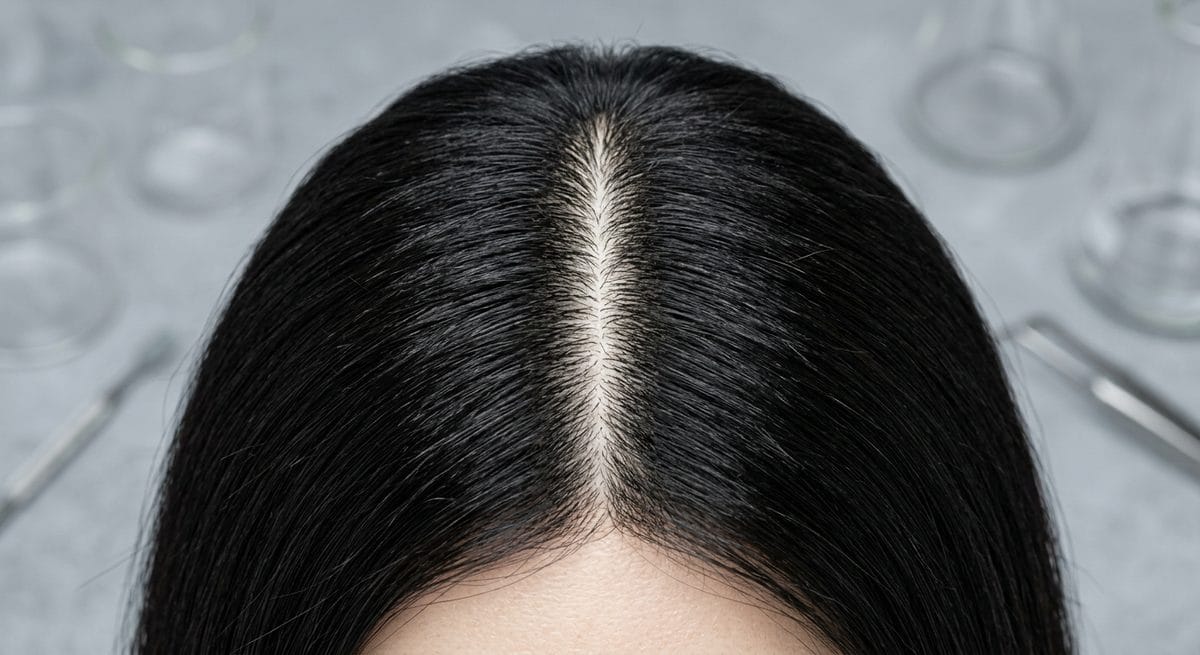
The scalp is a continuation of the skin on your face, with some particularities: it has one of the highest densities of sebaceous glands on the body, it lives mostly covered by hair, and it hosts the follicles themselves. Like any other skin, it changes gradually over the years — and like any other skin, it responds to consistent, appropriate care.
Skincare understood this decades ago: nobody waits for visible damage to start caring for their face. Scalp longevity simply applies the same logic to the skin you cannot see in the mirror.
What changes on the scalp over time
Scalp changes are gradual, which is why they often go unnoticed until they show in the hair. The most common shifts include:
- Changes in sebum production. The scalp can become oilier or drier over the years, altering how it feels between washes and how the roots look.
- A more reactive surface. Tightness, itching or discomfort appearing with products or washing habits that never caused problems before.
- Flaking tendencies. Dryness or greasy-flake patterns that come and go, often linked to the scalp’s overall balance.
- Buildup. Product residue, styling leftovers and environmental particles accumulating on a surface that is harder to rinse than facial skin.
None of these changes is dramatic on its own. But together they define the environment every follicle works in — and a comfortable, balanced environment is the first condition for hair that keeps looking healthy over the years.
The signs your scalp is asking for attention
You do not need instruments to read the basics. Persistent oiliness at the roots, visible flakes, itching or tightness after washing, discomfort when wearing the hair tied, or a scalp that feels different from how it used to — all of these are the scalp’s way of signalling that its balance needs support. The earlier you listen, the simpler the response usually is.
Caring for scalp longevity: the principles
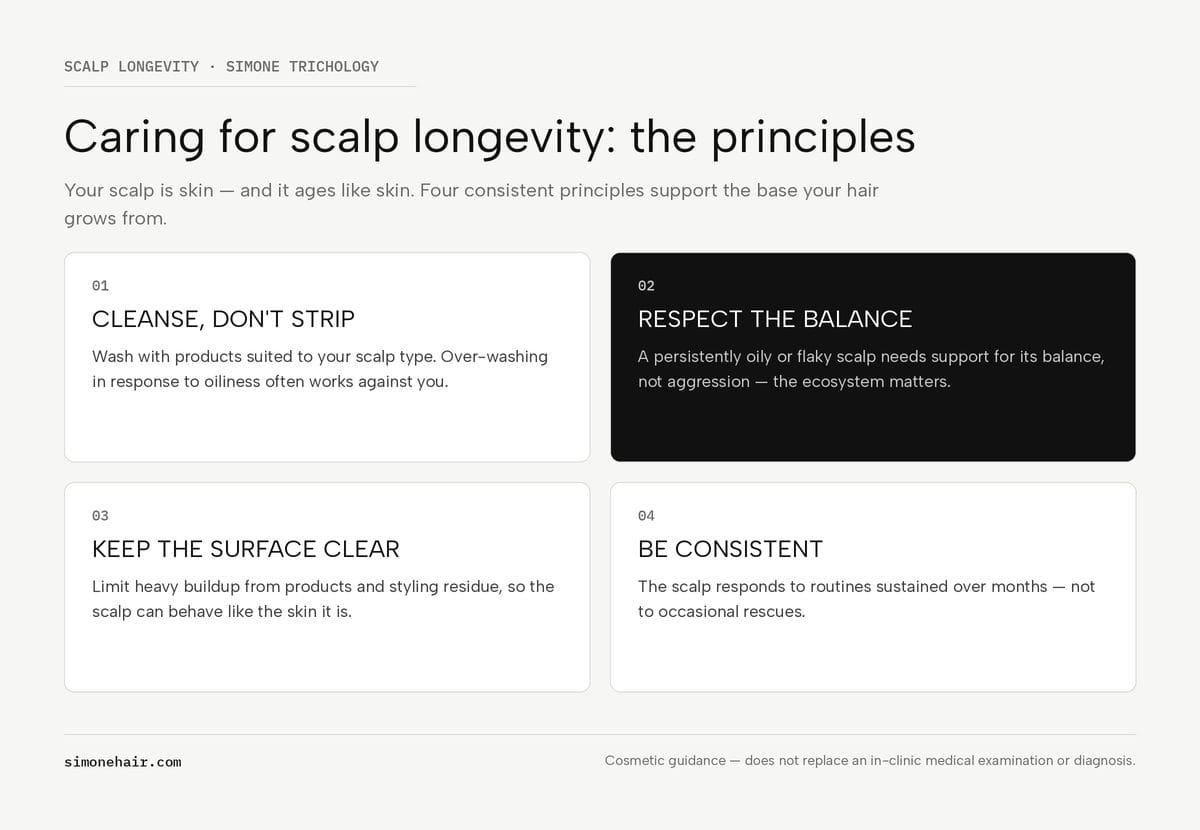
Scalp longevity is not a shelf of new products. It rests on a few consistent principles:
- Cleanse appropriately, not aggressively. Washing with products suited to your scalp type — and not over-washing in response to oiliness, which often works against you.
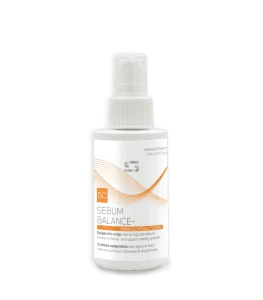
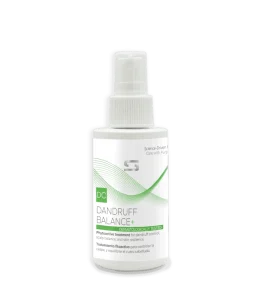
- Respect the balance. A persistently oily or flaky scalp needs support for its balance, not stripping. Our clinical dandruff & microbiome care range is built around this principle.
- Keep the surface clear. Limiting heavy buildup so the scalp can behave like the skin it is.
- Be consistent. The scalp responds to routines sustained over months — not to occasional rescues.
For the complete routine, step by step, see our full guide to scalp health.
Know your scalp’s starting point
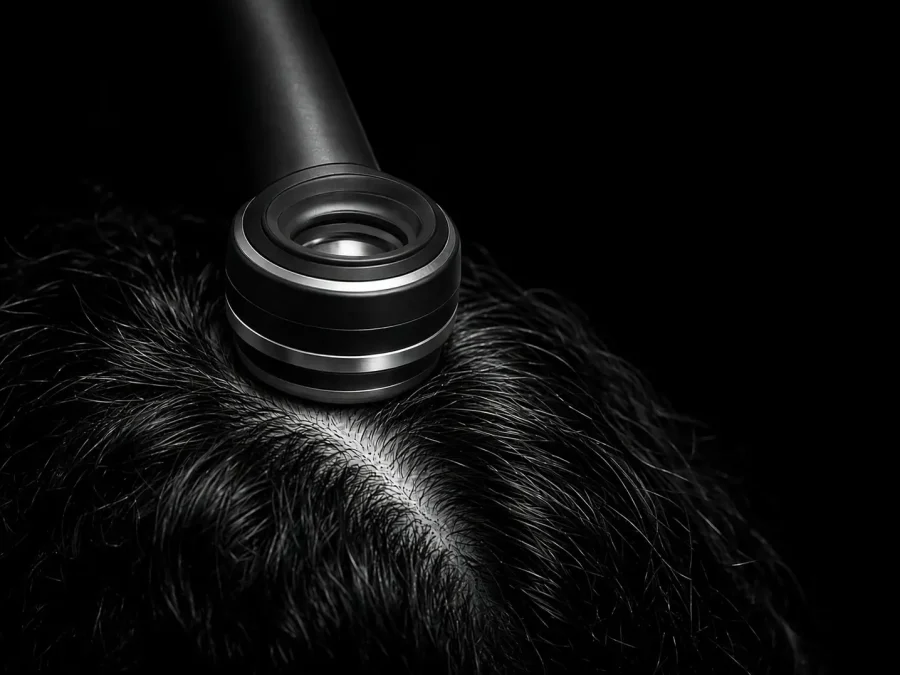
Every scalp ages differently — which is exactly why generic advice has limits. The practical first step of scalp longevity is knowing where your scalp stands today: its type, its balance, and what deserves attention first.
Our free online Hair Analysis reviews your case in five guided steps, with your photographs assessed personally by our trichologist — more than 37 years of practice, since 1989 — and returns a personalised care protocol at no cost.
SIMONE TRICHOLOGY products are cosmetic products (Regulation (EC) 1223/2009) and are not intended to diagnose, treat, cure or prevent any medical condition. If you notice persistent scalp symptoms, seek assessment from a qualified professional.