


Home › Trichology for beginners › Chapter 03
Seborrheaand Sebaceous Processes
Seborrhea is caused by overactive sebaceous glands that secrete more sebum than normal. Learn the four types and how each is approached.
 Est. 1989 — Spain
Seborrhea — or scalp grease — is a problem whose origin lies on the inside, while its signs usually show on the outside. It is felt on the skin and within the follicle, when the follicular sac fills with sebum.
What is seborrhea
Sebum is the oily substance produced by the sebaceous glands, which are attached to each hair follicle. In the right amount it lubricates and protects the skin and hair and limits water loss. Seborrhea occurs when those glands become overactive and secrete more sebum than normal.
It typically affects areas with a high density of sebaceous glands — the scalp, face and upper trunk — and tends to be chronic or recurrent, varying with age, sex, hormonal status and the way the scalp is cared for.
Why it happens
The cause of seborrhea is multifactorial: it involves the interaction of hormonal, genetic, nervous and environmental factors. No single trigger explains it on its own.
Hormones (androgens)
Androgens such as testosterone — and especially DHT, formed in the gland by the enzyme 5-alpha-reductase — stimulate sebaceous activity. This is why oiliness often peaks at puberty, pregnancy or with endocrine changes.
Genetics
Some people inherit larger, more active glands or a higher density of androgen receptors, making them more prone to an oily scalp even with careful hygiene.
Nervous factors & stress
Stress and activation of the stress axis are recognised contributors, which is why flare-ups often coincide with demanding periods.
External factors
Humidity, temperature, pollution, harsh or overly stripping products, and washing habits all modulate how much sebum the scalp produces.
The four types of seborrhea
To treat seborrhea successfully you first have to identify the grease correctly and then classify it. SIMONE TRICHOLOGY distinguishes four different types, based on the state of the skin and the follicular bulb:
Real seborrhea
Seborrhea in two layers
Seborrhea in four layers
Apparent seborrhea
In apparent seborrhea, although grease is visible on the outside, inside the follicle it is essentially absent — which is why correct identification matters so much before any treatment.
Sweat vs sebum: avoiding confusion
Two disorders are often mistaken for seborrhea because they also leave the scalp feeling wet or heavy — but they involve sweat, not grease:
Bromhidrosis
When the sebaceous gland and the apocrine sweat gland secrete in equal parts, the bulb is “drowned” and slowly breaks down.
Hyperhidrosis
Excessive secretion of the eccrine sweat gland — that is, excess sweat rather than excess sebum.
The practical test: sweat is easy to confuse with grease. If there is no excess sebum inside the follicle, then what you are seeing is an excess of body sweat — not seborrhea.
Suggested approach
Because the four types differ in where the grease sits and whether hair loss is involved, the routine is matched to the type identified. In general, the goal is to regulate sebum production and rebalance the scalp — not to strip it aggressively, which can rebound into more oiliness.
How seborrhea is approached
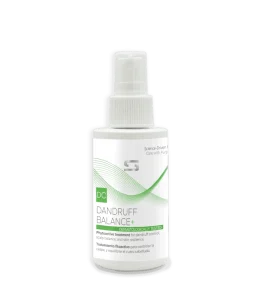
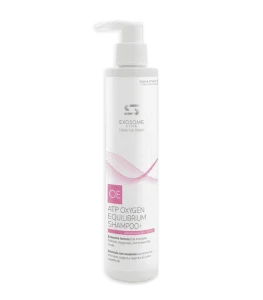
A typical scalp-balancing routine prepares and purifies the scalp, cleanses regularly with sebum-regulating shampoos (alternating formulas according to the type), and applies a leave-in sebum-control treatment over a sustained period. Where hair loss coexists (as in two-layer seborrhea), the routine also supports the follicle.
For the day-to-day side of managing an oily scalp, see our practical guide on how often to wash your hair.
Because the right routine depends on correctly identifying which of the four types you have — and whether what you see is sebum or sweat — a personalised assessment is the safest starting point.
Clinical references
- Sebaceous gland activity, Malassezia metabolism and individual susceptibility in scalp disorders — review literature (J Invest Dermatol; PMC).
- Androgen and DHT regulation of sebaceous secretion via 5-alpha-reductase — dermatology references (MSD Manual; DermNet NZ).
- Multifactorial etiology of seborrhea: hormonal, genetic, neurogenic and environmental factors (StatPearls, NCBI).
Start with a real assessment
Your scalp, read by a trichologist.
Three photographs, four minutes. Complimentary, reviewed personally within 24 hours.